ABC - DEF - GHI - JKL - MNO - PQRS - TUV - WXYZ Dryland systems
Similar term(s): drylands.
Definition:
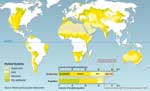
Dryland systems are ecosystems characterised by a lack of water. They include
cultivated lands, scrublands, shrublands, grasslands, savannas, semi-deserts and
true deserts.
The lack of water constrains the production of crops, forage, wood, and other
ecosystem services.
Four dryland subtypes are widely recognized: dry sub-humid,
semiarid, arid, and
hyperarid, showing an increasing level of aridity or moisture
deficit.
Source & ©: GreenFacts based on Millennium Ecosystem Assessment
Desertification Synthesis Report

More:
Drylands refer to land areas where the mean annual precipitation (P) is less
than two thirds of potential evapotranspiration (PET = potential evaporation
from soil plus transpiration by plants), excluding polar regions and some high
mountain areas which meet this criterion but have completely different
ecological characteristics.
Hyperarid areas, also referred to as true deserts, have a P/PET ratio of less
than 0.05.
Arid areas have a P/PET ratio of 0.05 to 0.20.
Semiarid areas have a P/PET ratio of 0.20 to 0.50.
Dry sub-humid areas have a P/PET ratio of 0.50 to 0.65.
Source & ©: GreenFacts, based on CBD
Dry and Sub-humid Lands Biodiversity
Definitions
To read about this term in context: GreenFacts Digest on Desertification:
ABC - DEF - GHI - JKL - MNO - PQRS - TUV - WXYZ |