ABC - DEF - GHI - JKL - MNO - PQRS - TUV - WXYZ Magnetic Resonance Imaging (MRI)
Similar term(s): nuclear magnetic resonance imaging.
Definition:
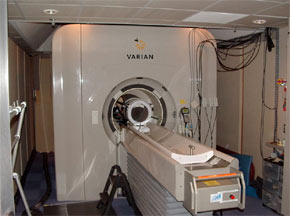
A technique that uses a strong circular magnet in combination with pulses of
radio waves to produce detailed images of your internal organs. MRI is
especially useful for imaging soft tissue in the brain, spine, joints, and
inside bones.
Doctors can use MRI to see for instance the difference between normal and
diseased brain tissue or which parts of the brain are active when you perform
certain tasks or feel certain emotions and sensations.
MRI is one of several Nuclear Magnetic Resonance techniques.
Source & ©: GreenFacts, based on Institute of Physics Inside story: MRI scans

More:
Magnetic Resonance Imaging (MRI) works by measuring the way that these
hydrogen atoms [in the body] absorb and then give off electromagnetic energy.
When you have an MRI scan, you lie inside a machine that contains a powerful
magnet. The nucleus of a hydrogen atom is like a tiny magnet so, by lying in
line with the strong magnetic field inside the scanner, all your hydrogen nuclei
line up too – just like a compass needle lining itself up with the Earth’s
magnetic field.
The scanner also has several electric coils which create variations in the
strength of the magnetic field at different points in your body. This means that
each hydrogen nucleus experiences a slightly different magnetic field strength,
which is important for detecting where exactly they are.
A pulse of radio waves is used which gives enough energy to the hydrogen
nuclei for them to change direction. When the pulse is switched off the nuclei
revert back to their original position and each nucleus gives off energy in the
form of a radio wave. The frequency of these waves depends on the strength of
the magnetic field where each nucleus is and this means that the scanner can
work out the location of each nucleus.
The radio waves given off also allow the scanner to work out what type of body
tissue the hydrogen nuclei are part of. This information is used to create a map
of the different types of tissue in your body.
Source & ©: Institute of Physics Inside story: MRI
scans
Related words: Magnetic Resonance Spectroscopy (MRS) - Nuclear Magnetic Resonance (NMR) To read about this term in context: GreenFacts Digest on Static Fields:
ABC - DEF - GHI - JKL - MNO - PQRS - TUV - WXYZ |