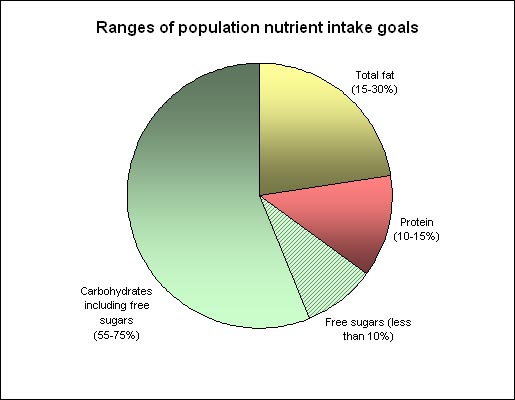
Table 6. Ranges of population nutrient intake goals
a This is calculated as: total fat - (saturated fatty acids +
polyunsaturated fatty acids + trans fatty acids).
b The percentage of total energy available after taking into account that
consumed as protein and fat, hence the wide range. c The term "free
sugars" refers to all monosaccharides and disaccharides added to foods by the
manufacturer, cook or consumer, plus sugars naturally present in honey, syrups and
fruit juices.
d The suggested range should be seen in the light of the Joint
WHO/FAO/UNU Expert Consultation on Protein and Amino Acid Requirements in Human
Nutrition, held in Geneva from 9 to 16 April 2002(2).
e Salt should be iodized appropriately (6). The need to adjust salt
iodization, depending on observed sodium intake and surveillance of iodine status of
the population, should be recognized.
f See page 58, under "Non-starch polysaccharides".
|
|
Dietary factor
|
Goal
(in % of total energy)
|
|
Total fat
|
15-30%
|
| |
Saturated fatty acids |
<10% |
| Polyunsaturated fatty acids (PUFAs) |
6-10% |
| n-6 Polyunsaturated fatty acids (PUFAs) |
5-8% |
| >n-3 Polyunsaturated fatty acids (PUFAs) |
1-2% |
| >Trans fatty acids |
<1% |
| >Monounsaturated fatty acids (MUFAs) |
By differencea |
|
Total carbohydrate
|
55-75%b
|
| |
Free sugarsc |
<10% |
|
Protein
|
10-15%d
|
|
Dietary factor
|
Goal
(in mg or g)
|
| Cholesterol |
<300mg per day |
| Sodium chloride (sodium)e |
<5g per day (<2 g per day) |
| Fruits and vegetables |
≥400g per day |
| Total dietary fibre |
From foodsf |
| Non-starch polysaccharides (NSP) |
From foodsf |
Source: WHO/FAO "Diet, Nutrition and the prevention of chronic diseases"
Section 5.1.3 A summary of population nutrient intake goals 
Source: Greenfacts based on the above table
Related publication:
Other Figures & Tables on this publication:
Table 1: Global and regional per capita food consumption (kcal per capita per day)
Table 2. Vegetable and animal sources of energy in the diet (kcal per capita per day)
Table 3: Vegetable and animal sources of energy in the diet (kcal per capita per day)
Supply of fat (g per capita per day)
Table 4. Per capita consumption of livestock products
Table 6. Ranges of population nutrient intake goals
Table 7: Summary of strength of evidence on factors that might promote or
protect against weight gain and obesitya
Table 8: Classification of overweight in adults according to BMIa
Table 9: Summary of strength of evidence on lifestyle factors and risk of developing
type 2 diabetes
Table 10: Summary of strength of evidence on lifestyle factors and risk of developing
cardiovascular diseases
Table 11: Summary of strength of evidence on lifestyle factors and the risk of developing cancer
Table 12: Trends in levels of dental caries in 12-year-olds mean [number of] delayed, missing, filled permanent teeth (DMFT) per person aged 12 years [as a result of carries]
Table 13: Prevalence of toothlessness (edentulousness) in older people throughout the world
Table 14: Summary of strength of evidence linking diet to dental caries
Table 15: Summary of strength of evidence linking diet to dental erosion
Table 16: Summary of strength of evidence linking diet to enamel developmental defects
Table 17: Summary of strength of evidence linking diet to periodontal disease
Table 18: Summary of strength of evidence linking diet to osteoporotic fractures
Figure 3: Trends in the supply of vegetables, by region, 1970-2000
Figure 4: Ranges of population nutrient intake goals
Figure 2. Calories from major commodities in developing countries
Comment
Degrees of evidence by the Joint WHO/FAO Expert Consultation