Languages:

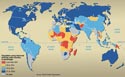
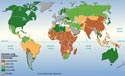
Box 3.1. Linkages between Ecosystem Services and Human Well-being: Health(see figure on linkages in Box 3.1). See also specific information for each main component: "By health, we refer to the ability of an individual to feel well and be strong, or in other words to be adequately nourished and free from disease, to have access to adequate and clean drinking water and clean air, and to have the ability to have energy to keep warm and cool. Human health is both a product and a determinant of well-being. Changes in provisioning services such as food, water, medicinal plants, and access to new medicines and changes in regulating services that influence air quality, water quality, disease regulation, and waste treatment also have very strong impacts on health. Changes in cultural services can have strong influences on health, since they affect spiritual, inspirational, aesthetic, and recreational opportunities, and these in turn affect both physical and emotional states. Changes in supporting services have a strong influence on all of the other categories of services. These benefits are moderately mediated by socioeconomic circumstances. The wealthy can purchase substitutes for some health benefits of ecosystems (such as medicinal plants or water quality), but they are more susceptible to changes affecting air quality. The following are some examples of health components of well-being affected by ecosystem change. Nutrition: In 2000, about a quarter of the burden of disease among the poorest countries was attributable to childhood and maternal undernutrition. Worldwide, undernutrition accounted for nearly 10% of the global burden of disease (R16.1.2). Water and Sanitation: The burden of disease from inadequate water, sanitation, and hygiene totals 1.7 million deaths and results in the loss of at least 54 million healthy life years annually. Along with sanitation, water availability and quality are well recognized as important risk factors for infectious diarrhea and other major diseases. (See Box Table.) Some 1.1 billion people lack access to clean drinking water, and more than 2.6 billion lack access to sanitation (C7.ES). (See Box Figure B and Figure C). Globally, the economic cost of pollution of coastal waters is estimated to be $16 billion annually, mainly due to human health impacts (C19.3.1)." Vector-borne Disease: Actions to reduce vector-borne diseases have resulted in major health gains and helped to relieve important constraints on development in poor regions. Vector-borne diseases cause approximately 1.4 million deaths a year, mainly due to malaria in Africa. These infections are both an effect and a cause of poverty (R12-ES). Prevalence of a number of infectious diseases appears to be growing, and environmental changes such as deforestation, dam construction, road building, agricultural conversion, and urbanization are contributing factors in many cases (C14.2). Medicines: The use of natural products in the pharmaceutical industry has tended to fluctuate widely, with a general decline in pharmaceutical bioprospecting by major companies. Historically, most drugs were obtained from natural products. Even near the end of the twentieth century, approximately 50% of prescription medicines were originally discovered in plants (C10.2). Natural products still are actively used in drug exploration. Medicinal plants continue to play an important role in health care systems in many parts of the world. One MA sub-global assessment in the Mekong wetlands identified more than 280 medically important plant species, of which 150 are still in regular use (C10.2.2). Medicinal plants have generally declined in availability due to overharvesting and loss of habitats (C10.5.4). Source & ©
Millennium Ecosystem Assessment Related publication:
Other Figures & Tables on this publication: Box 3.1 Table. Selected Water-related Diseases. Table 1.1. Comparative table of reporting systems as defined by the Millennium Assessment Table 2.2. Indicative Ecosystem Service Trade-offs. Table 5.1. Main Assumptions Concerning Indirect and Direct Driving Forces Used in the MA Scenarios Table 5.2. Outcomes of Scenarios for Ecosystem Services in 2050 Compared with 2000 Table 5.3. Outcomes of Scenarios for Human Well-being in 2050 Compared with 2000 Table 8.1. Applicability of Decision Support Methods and Frameworks Marine, Coastal, and Island Systems Urban, Dryland and Polar systems Inland water and Mountain systems Box Figure B. Proportion of Population with Improved Drinking Water Supply in 2002 Box Figure C. Proportion of population with improved sanitation coverage in 2002 Figure 1.2. Conversion of Terrestrial Biomes Figure 1.3. Decline in Trophic Level of Fisheries Catch Since 1950 Figure 1.7. Growth in Number of Marine Species Introductions. Figure 1.8. Species Extinction Rates Figure 3.4. Collapse of Atlantic Cod Stocks Off the East Coast of Newfoundland in 1992 Figure 3.5. Dust Cloud Off the Northwest Coast of Africa, March 6, 2004 Figure 3.6. Changes in Economic Structure for Selected Countries Figure 4.1. GDP Average Annual Growth, 1990-2003 Figure 4.2. Per capita GDP Average Annual Growth, 1990-2003 Figure 4.3. Main Direct Drivers of Change in Biodiversity and Ecosystems Figure 5.1. MA World Population Scenarios Figure 5.3. Number of Ecosystem Services Enhanced or Degraded by 2050 in the Four MA Scenarios Figure 6.1. MA Sub-Global Assessments Figure 7.1. Characteristic Time and Space Scales Related to Ecosystems and Their Services Box 3.1. Linkages between Ecosystem Services and Human Well-being Box 6.1 Local Adaptations of MA Conceptual Framework Scenarios of the Millennium Ecosystem Assessment MA Scenarios - Global Orchestration MA Scenarios - Order from Strength MA Scenarios - Adapting Mosaic Marine, Coastal and Island systems Urban, Dryland and Polar systems Inland waters and Mountain systems Box 3.2. Ecosystems and the Millennium Development Goals Box 3.1. Linkages between Ecosystem Services and Human Well-being: Basic Materials for a Good Life Box 3.1. Linkages between Ecosystem Services and Human Well-being: Health Box 3.1. Linkages between Ecosystem Services and Human Well-being: Good Social Relations Box 3.1. Linkages between Ecosystem Services and Human Well-being: Security Box 3.1. Linkages between Ecosystem Services and Human Well-being: Freedom of Choice and Action Box 6.1 Local Adaptations of MA Conceptual Framework Figure 1.1. Time Series of Intercepted Continental Runoff and Large Reservoir Storage, 1900-2000 Figure 1.6. Estimated Total Reactive Nitrogen Deposition from the Atmosphere Figure 2.1. Estimated Global Marine Fish Catch, 1950-2001. Figure 2.2. Trend in Mean Depth of Catch Since 1950. Figure 3.2. Annual Flow of Benefits from Forests in Selected Countries Figure 3.3. Economic Benefits Under Alternate Management Practices Table 4.1. Increase in Nitrogen Fluxes in Rivers to Coastal Oceans Figure 5.2. Comparison of Global River Nitrogen Export Figure 5.4. Number of Undernourished Children Projected in 2050 Under MA Scenarios Figure 5.5. Net Change in Components of Human Well-being Between 2000 and 2050 Under MA Scenarios. Figure 8.1. Total Carbon Market Value per Year (in million dollars nominal) |