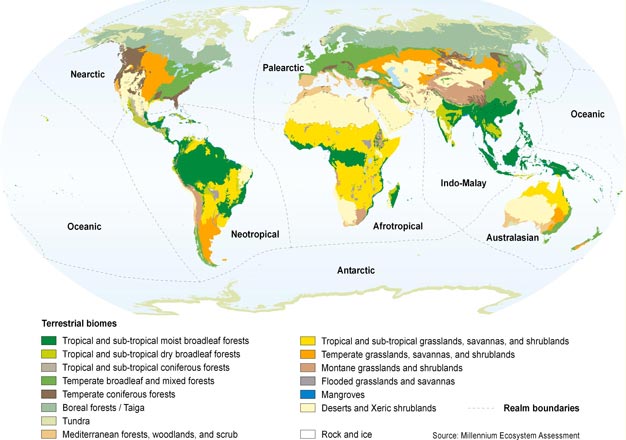
Figure 1.3. The 8 Biogeographical Realms and 14 Biomes Used in the MA
(C4.Figure C4.3)
Biogeographic realms are large spatial regions within which ecosystems share a broadly similar biological evolutionary history. Eight terrestrial biogeographic realms are typically recognized, corresponding roughly to continents. Although similar ecosystems (such as tropical moist forests) share similar processes and major vegetation types wherever they are found, their species composition varies markedly depending on the biogeographic realm in which they are found. Assessing biodiversity at the level of biogeographic realms is important because the realms display substantial variation in the extent of change, they face different drivers of change, and there may be differences in the options for mitigating or managing the drivers. Terrestrial biogeographic realms reflect freshwater biodiversity patterns reasonably well, but marine biogeographic realms are poorly known and largely undefined (C4.2.1).
Source: Millennium Ecosystem Assessment
 Ecosystems and Human Well-being: Biodiversity Synthesis (2005)
, p.24
Ecosystems and Human Well-being: Biodiversity Synthesis (2005)
, p.24
Related publication:
Other Figures & Tables on this publication:
Direct cross-links to the Global Assessment Reports of the Millennium Assessment
Box 1. Biodiversity and Its Loss— Avoiding Conceptual Pitfalls
Box 1.1. Linkages among Biodiversity, Ecosystem Services, and Human Well-being
Box 1.2. Measuring and Estimating Biodiversity: More than Species Richness
Box 1.3. Ecological Indicators and Biodiversity
Box 1.4. Criteria for Effective Ecological Indicators
Box 2. MA Scenarios
Box 2.1. Social Consequences of Biodiversity Degradation (SG-SAfMA)
Box 2.2. Economic Costs and Benefits of Ecosystem Conversion
Box 2.3. Concepts and Measures of Poverty
Box 2.4. Conflicts Between the Mining Sector and Local Communities in Chile
Box 3.1. Direct Drivers: Example from Southern African Sub-global Assessment
Box 4.1. An Outline of the Four MA Scenarios
Box 5.1. Key Factors of Successful Responses to Biodiversity Loss
Figure 3.3. Species Extinction Rates
Figure 1.1. Estimates of Proportions and Numbers of Named Species in Groups of Eukaryote Species and Estimates of Proportions of the Total Number of Species in Groups of Eukaryotes
Figure 1.2. Comparisons for the 14 Terrestrial Biomes of the World in Terms of Species Richness, Family Richness, and Endemic Species
Figure 1.3. The 8 Biogeographical Realms and 14 Biomes Used in the MA
Figure 1.4. Biodiversity, Ecosystem Functioning, and Ecosystem Services
Figure 2. How Much Biodiversity Will Remain a Century from Now under Different Value Frameworks?
Figure 2.1. Efficiency Frontier Analysis of Species Persistence and Economic Returns
Figure 3. Main Direct Drivers
Figure 3.1. Percentage Change 1950–90 in Land Area of Biogeographic Realms Remaining in Natural Condition or under Cultivation and Pasture
Figure 3.2. Relationship between Native Habitat Loss by 1950 and Additional Losses between 1950 and 1990
Figure 3.3. Species Extinction Rates
Figure 3.4. Red List Indices for Birds, 1988–2004, in Different Biogeographic Realms
Figure 3.5. Density Distribution Map of Globally Threatened Bird Species Mapped at a Resolution of Quarter-degree Grid Cell
Figure 3.6. Threatened Vertebrates in the 14 Biomes, Ranked by the Amount of Their Habitat Converted by 1950
Figure 3.7. The Living Planet Index, 1970–2000
Figure 3.8. Illustration of Feedbacks and Interaction between Drivers in Portugal Sub-global Assessment
Figure 3.9. Summary of Interactions among Drivers Associated with the Overexploitation of Natural Resources
Figure 3.10. Main Direct Drivers
Figure 3.11. Effect of Increasing Land Use Intensity on the Fraction of Inferred Population 300 Years Ago of Different Taxa that Remain
Figure 3.12. Extent of Cultivated Systems, 2000
Figure 3.13. Decline in Trophic Level of Fisheries Catch since 1950
Figure 3.14. Estimated Global Marine Fish Catch, 1950–2001
Figure 3.15. Estimates of Forest Fragmentation due to Anthropogenic Causes
Figure 3.15. Estimates of Forest Fragmentation due to Anthropogenic Causes
Figure 3.15. Estimates of Forest Fragmentation due to Anthropogenic Causes
Figure 3.15. Estimates of Forest Fragmentation due to Anthropogenic Causes
Figure 3.15. Estimates of Forest Fragmentation due to Anthropogenic Causes
Figure 3.15. Estimates of Forest Fragmentation due to Anthropogenic Causes
Figure 3.16. Fragmentation and Flow in Major Rivers
Figure 3.17 Trends in Global Use of Nitrogen Fertilizer, 1961–2001 (million tons)
Figure 3.18 Trends in Global Use of Phosphate Fertilizer, 1961–2001 (million tons)
Figure 3.19. Estimated Total Reactive Nitrogen Deposition from the Atmosphere (Wet and Dry)
in 1860, Early 1990s, and Projected for 2050
Figure 3.20. Historical and Projected Variations in Earth’s Surface Temperature
Figure 4. Trade-offs between Biodiversity and Human Well-being under the Four MA Scenarios
Figure 4.1. Losses of Habitat as a Result of Land Use Change between 1970 and 2050 and Reduction in the Equilibrium Number of Vascular Plant Species under the MA Scenarios
Figure 4.2. Relative Loss of Biodiversity of Vascular Plants between 1970 and 2050 as a Result of Land Use Change for Different Biomes and Realms in the Order from Strength Scenario
Figure 4.3. Land-cover Map for the Year 2000
Figure 4.4. Conversion of Terrestrial Biomes
Figure 4.5. Forest and Cropland/Pasture in Industrial and Developing Regions under the MA Scenarios
Figure 4.6. Changes in Annual Water Availability in Global Orchestration Scenario by 2100
Figure 4.7. Changes in Human Well-being and Socioecological Indicators by 2050 under the MA Scenarios
Figure 6.1. How Much Biodiversity Will Remain a Century from Now under Different Value Frameworks?
Figure 6.2. Trade-offs between Biodiversity and Human Well-being under the Four MA Scenarios
Table 1.1. Ecological Surprises Caused by Complex Interactions
Table 2.1. Percentage of Households Dependent on Indigenous Plant-based Coping Mechanisms at Kenyan and Tanzanian Site
Table 2.2. Trends in the Human Use of Ecosystem Services and Enhancement or Degradation of the Service Around the Year 2000 - Provisioning services
Table 2.2. Trends in the Human Use of Ecosystem Services and Enhancement or Degradation of the Service Around the Year 2000 - Regulating services
Table 2.2. Trends in the Human Use of Ecosystem Services and Enhancement or Degradation of the Service Around the Year 2000 - Cultural services
Table 2.2. Trends in the Human Use of Ecosystem Services and Enhancement or Degradation of the Service Around the Year 2000 - Supporting services
Table 6.1. Prospects for Attaining the 2010 Sub-targets Agreed to under the Convention on Biological Diversity