

Languages:


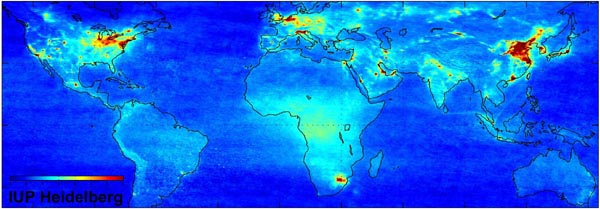
Context - In Europe, Nitrogen Dioxide (NO2) pollutes the air mainly as a result of road traffic and energy production.
Apart from giving rise to acid rain and other air pollutants, current levels of NO2 may affect our health.
How and to what extent?


This Digest is a faithful summary of two leading scientific consensus reports produced in 2003 and 2004 by the World Health Organization (WHO): "
Nitrogen dioxide is part of a group of gaseous air pollutants produced as a result of road traffic and other fossil fuel combustion processes.
Its presence in air contributes to the formation and modification of other air pollutants, such as ozone and particulate matter, and to acid rain. More...
2.1 Studies on human populations indicate that long-term exposure to NO2 levels currently observed in Europe may decrease lung function and increase the risk of respiratory symptoms such as acute bronchitis and cough and phlegm, particularly in children. Even though some studies have shown associations between NO2 exposure and mortality, present evidence is not sufficient to conclude that effects on mortality can be attributed to long-term exposure to NO2 itself (see also 3.3). More...
2.2 NO2 alone has been shown to cause acute health effects in controlled human exposure studies. Studies on human populations have not been able to isolate potential effects of NO2, because of the complex link between concentrations in ambient air of NO2, particulate matter, and ozone. More...
2.3 Several studies have shown that NO2 exposure increases allergic responses to inhaled pollens. More...
2.4 People with asthma and children in general are considered to be more vulnerable to NO2 exposure. More...
2.5 There is no evidence for a threshold for exposure to NO2 below which no effects on health are expected. More...
3.1 In Europe, NO2 air pollution is mainly caused by motor vehicles and, in some places, by energy production. More...
3.2 Individual exposure to NO2 depends mainly on local outdoor concentrations. However, it can also be affected by indoor pollution sources such as tobacco smoking and unvented cooking or heating appliances using gas. More...
3.3 Populations living near busy roads are particularly exposed to and affected by NO2 pollution . Studies have shown that short term peak exposures can increase respiratory allergic reactions. Even though some studies have shown associations between NO2 exposure and mortality, present evidence is not sufficient to conclude that effects on mortality can be attributed to long-term exposure to NO2 itself (see also 2.1). More...

4.1 No significant reductions in ambient NO2 concentrations have been witnessed. Hence, it is not known how such reductions could affect public health. More...
4.2 When setting guidelines to protect human health, both short-term (one hour or one day) and long term (one year) average NO2 concentrations are relevant. More...
4.3 Current WHO guideline values for NO2 already address both short-term exposure to emission peaks and long-term exposure throughout the year. However, because adverse effects have been observed within a range that includes the current annual WHO guideline value, it is recommended to maintain or lower that value. More...
5.1 There are uncertainties linked to gaps in our knowledge about air pollution and the related health effects. In this study, uncertainties were taken into account but could not be quantified for all answers. It was stressed that, in accordance with the precautionary principle, uncertainties should not be taken as a cause for not acting if the potential risks are high and measures to reduce the risks are available at reasonable cost.
Examples of uncertainties related to this study: More...
5.2 A publication bias can occur when only certain types of results have been published. For example, results that show large effects that are statistically significant are more easily accepted for publication. More...
5.3 Uncertainties may arise when experimental studies and studies on human populations do not point in the same direction. For instance they may disagree whether thresholds exist below which ozone or PM have no effects. More...
5.4 For particulate matter, uncertainties remain regarding the precise contribution of different pollution sources to health effects, as well as regarding the precise contribution of the different components of particulate matter. More...
5.5 Some uncertainties arise in this study when analyzing results with different statistical methods. However, the links between air pollution and health remain, no matter which method of analysis is used. More...
5.6 There are uncertainties regarding regional differences in the effects of air pollution, due to variations in characteristics of populations, environments, and pollution mixes. More...
Population groups that have potentially increased vulnerability to effects of exposure to air pollutants are:
7.1 In setting standards to protect public health from the effects of air pollutants, the concept of thresholds may not be useful, because certain population groups are very sensitive, and effects are detected even at low levels.To enable the development of effective risk reduction strategies based on qualitative and quantitative knowledge, further data analysis and more comprehensive monitoring is recommended. More...
7.2 In addition to the pollutants discussed in this study, other aspects of air pollution should also be addressed in the development of air pollution policy in Europe. These include air pollutants such as carbon monoxide (CO), sulphur dioxide (SO2), persistent organic pollutants (POP), certain metals, certain volatile organic compounds, and nitrogen trichloride. The combined effects of the urban air pollution mix is also an important issue that remains unresolved. More...
7.3 Evidence of the health effects of air pollution at levels currently common in Europe has grown stronger over the past few years, and is sufficient to recommend further policy action to reduce emissions of particulate matter, ozone, and nitrogen dioxide. More...



This summary is free and ad-free, as is all of our content. You can help us remain free and independant as well as to develop new ways to communicate science by becoming a Patron!





 BECOME A PATRON!