

Languages:

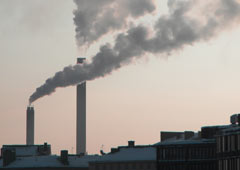
Context - Air can be contaminated by a range of very different particles such as dust, pollen, soot, smoke, and liquid droplets. Many of them can harm our health, especially very small particles that can enter deep into the lungs.
What is known about the different health effects of particles?


This Digest is a faithful summary of two leading scientific consensus reports produced in 2003 and 2004 by the World Health Organization (WHO): "
Particulate matter is the sum of all solid and liquid particles suspended in air, many of which are hazardous. This complex mixture contains for instance dust, pollen, soot, smoke, and liquid droplets. More...
1.1 These particles come in many different size ranges such as coarse, fine and ultrafine. They also vary in composition and origin. More...
1.2 Particles are either directly emitted into the air by sources such as combustion processes and windblown dust, or formed in the atmosphere by transformation of emitted gases such as SO2. More...
1.3 In Europe, sulphate and organic matter are the main components of particulate air pollution in terms of the mass of the particles. Mineral dust, nitrate, and soot can also be major components under certain conditions. More...
2.1 In Europe, long-term exposure to current ambient particulate matter concentrations may affect the lungs of both children and adults and may reduce life expectancy by a few months, mainly in subjects with pre-existing heart and lung diseases. More...
2.2 Ambient particulate matter is responsible for harmful effects on health, even in the absence of other air pollutants. Both fine and coarse particles have been shown to affect health, in particular the respiratory system. More...
2.3 Fine particles are more dangerous than coarse particles. Apart from the size of the particles, other specific physical, chemical, and biological characteristics that can influence harmful health effects include the presence of metals, PAHs, other organic components, or certain toxins. More...
2.4 When particulate matter is combined with other air pollutants, the individual effects of each pollutant are cumulated. In certain cases, especially for combinations of particulate matter with ozone or allergens, effects were shown to be even greater than the sum of the individual effects. When particulate matter interacts with gases, this interaction changes its composition and, therefore, its effects. More...
2.5 Certain groups of people are more susceptible to suffer health effects due to ambient particulate matter. These include elderly people, children, people with a pre-existing heart and lung disease, asthmatics, and socially disadvantaged and poorly educated populations. More...
2.6 Because some persons are vulnerable even at low concentrations of ambient particular matter, no threshold has been identified below which nobody’s health is affected. More...
3.1 Studies on human populations suggest that a number of sources of particulate matter, especially motor vehicle emissions and coal combustion, are linked to adverse health effects. More...
3.2 Personal exposure depends both on particulate matter levels in ambient outdoor air and on specific indoor sources of particulate matter such as smoking or exposure at work. More...
3.3 The impact on public health of long-term exposure to particulate matter is probably larger than that of short-term exposure to peak concentrations. Long-term exposure particularly affects populations living near busy roads. More...
4.1 Reductions in ambient particulate matter concentrations have had some positive impacts on public health. Changes in the composition of particulate matter might also reduce its adverse health effects. More...
4.2 Guidelines are recommended to be set for both short-term and long-term exposures to ambient particulate matter. More...
4.3 Current WHO Air quality guidelines describe the relationships between exposure to particulate matter and various health effects, but they recommend no specific maximum exposure values. New scientific evidence justifies reconsidering these relationships and developing guideline values both for fine and coarse particles. More...
5.1 There are uncertainties linked to gaps in our knowledge about air pollution and the related health effects. In this study, uncertainties were taken into account but could not be quantified for all answers. It was stressed that, in accordance with the precautionary principle, uncertainties should not be taken as a cause for not acting if the potential risks are high and measures to reduce the risks are available at reasonable cost. More...
Examples of uncertainties related to this study:
5.2 A publication bias can occur when only certain types of results have been published. For example, results that show large effects that are statistically significant are more easily accepted for publication. More...
5.3 Uncertainties may arise when experimental studies and studies on human populations do not point in the same direction. For instance they may disagree whether thresholds exist below which ozone or PM have no effects. More...
5.4 For particulate matter, uncertainties remain regarding the precise contribution of different pollution sources to health effects, as well as regarding the precise contribution of the different components of particulate matter. More...
5.5 Some uncertainties arise in this study when analyzing results with different statistical methods. However, the links between air pollution and health remain, no matter which method of analysis is used. More...
5.6 There are uncertainties regarding regional differences in the effects of air pollution, due to variations in characteristics of populations, environments, and pollution mixes. More...
Population groups that have potentially increased vulnerability to effects of exposure to air pollutants are:
7.1 In setting standards to protect public health from the effects of air pollutants, the concept of thresholds may not be useful, because certain population groups are very sensitive, and effects are detected even at low levels.To enable the development of effective risk reduction strategies based on qualitative and quantitative knowledge, further data analysis and more comprehensive monitoring is recommended. More...
7.2 In addition to the pollutants discussed in this study, other aspects of air pollution should also be addressed in the development of air pollution policy in Europe. These include air pollutants such as carbon monoxide (CO), sulphur dioxide (SO2), persistent organic pollutants (POP), certain metals, certain volatile organic compounds, and nitrogen trichloride. The combined effects of the urban air pollution mix is also an important issue that remains unresolved. More...
7.3 Evidence of the health effects of air pollution at levels currently common in Europe has grown stronger over the past few years, and is sufficient to recommend further policy action to reduce emissions of particulate matter, ozone, and nitrogen dioxide. More...



This summary is free and ad-free, as is all of our content. You can help us remain free and independant as well as to develop new ways to communicate science by becoming a Patron!




 BECOME A PATRON!