

Languages:

The source document for this Digest states:
Answer:
Long-term exposure to current ambient PM concentrations may lead to a marked reduction in life expectancy. The reduction in life expectancy is primarily due to increased cardio-pulmonary and lung cancer mortality.
Increases are likely in lower respiratory symptoms and reduced lung function in children, and chronic obstructive pulmonary disease and reduced lung function in adults.
Rationale:
Given the absence of clearly documented thresholds in the exposure-response relationships for long-term as well as short-term effects (see answer and rationale to question 3), and given the fact that these exposure response relationships have been established in studies at currently observed exposure ranges, adverse effects on health occur with certainty in Europe. Such effects are a reduction of life expectancy by up to a few years (73), with possibly some contribution from increased infant mortality in the more highly exposed areas (73, 74, 75), as increased chronic bronchitis and chronic obstructive pulmonary disease (COPD) rates, reduced lung function and perhaps other chronic effects. Recently it was shown that a part of effects of air pollution on life expectancy can also be calculated using time series studies (76). For almost all types of health effects, data are available not only from studies conducted in the United States of America and Canada (77, 78), but also from Europe (18, 79), which adds strength to the conclusions.
A recent estimate for Austria, France and Switzerland (combined population of about 75 million) is that some 40 000 deaths per year can be attributed to ambient PM (80). Similarly high numbers have been estimated for respiratory and cardiovascular hospital admissions, bronchitis episodes and restricted activity days. The Global Burden of Disease project has recently expanded its analysis of the impact of common risk factors on health to include environmental factors. It has been estimated that exposure to fine particulate matter in outdoor air leads to about 100 000 deaths (and 725 000 years of life lost) annually in Europe (2).
Strong evidence on the effect of long-term exposure to PM on cardiovascular and cardiopulmonary mortality comes from cohort studies (see also rationale to question 1). The ACS study (81) found an association of exposure to sulfate and mortality. In the cities where also PM2.5 has been measured, this parameter showed the strongest association with mortality. The re- analysis by HEI (10) essentially found the same results. As described in Pope et al. (13) the ACS cohort was extended, the follow-up time was doubled to 16 years and the number of deaths was tripled. The ambient air pollution data were expanded substantially, data on covariates were incorporated and improved statistical modelling was used. For all causes and cardiopulmonary deaths, statistically significant increased relative risks were found for PM2.5. TSP and coarse particles (PM15 – PM2.5) were not significantly associated with mortality. The US-Harvard Six Cities Study (82) examined various gaseous and PM indices (TSP, PM2.5, SO4-, H+, SO2 and ozone). Sulfate and PM2.5 were best associated with cardiopulmonary and cardiovascular mortality. The re-analysis of HEI (10) also essentially confirmed these results.
A random sample of 5000 people was followed in a cohort study from the Netherlands (12). The association between exposure to air pollution and (cause specific) mortality was assessed with adjustment for potential confounders. Cardiopulmonary mortality was associated with living near a major road (relative risk 1.95, 95% CI 1.09–3.52) and, less consistently, with the estimated ambient background concentration (1.34, 0.68–2.64). The relative risk for living near a major road was 1.41 (0.94–2.12) for total deaths. Non-cardiopulmonary, non-lung cancer deaths were unrelated to air pollution (1.03, 0.54–1.96 for living near a major road). The authors conclude that long-term exposure to traffic-related air pollution may shorten life expectancy.
Of the long-term cohort studies discussed above, the Harvard Six Cities Study found an increased, but statistically non-significant risk for PM2.5 and lung cancer (82). The extended ACS study reported a statistically significant association between living in a city with higher PM2.5 and increased risk of dying of lung cancer (13). The ASHMOG study found increases in lung cancer incidence and mortality to be most consistently associated with elevated long-term ambient concentrations of PM10 and SO2, especially among males (9).
A few animal studies using long-term exposure to diluted diesel motor exhaust (DME) have been reported. There is extensive evidence for the induction of lung cancer in rats, but not in hamsters or mice, from chronic inhalation of high concentrations of diesel soot. High particle deposition- related inflammatory effects, including generation of high concentration of oxygen radicals and increased oxidative DNA damage in proliferating epithelial lung cells, may be the mechanism by which particles induce lung tumours in rats (83, 84). However, there may be a threshold for this effect, well above environmental exposure levels (85, 86). No inflammatory or other toxic effects were found in rats chronically exposed to lower concentrations of DME (87). The exposure of young adult humans for 2 hours to diesel engine exhaust in the same lower concentration range as in the rat study (87) caused clear inflammatory effects in the lung (56, 57, 58, 59, 60, 61, 62). Thus, this kind of particle-induced inflammation, together with the carcinogenic potential of diesel soot-attached PAH, may add to the air pollutant-related lung cancer in humans. Diesel particulate matter is formed not only by the carbon nucleus but also a wide range of different components, and its precise role in diesel exhaust-induced carcinogenicity is unclear. However, in high-exposure animal test systems, diesel particulate matter has been shown to be the most important fraction of diesel exhaust (84).
In the Harvard 24 Cities study, significant associations of lung function parameters (FEV1, FVC) and increase of bronchitis with acidic particles (H+) were found (77, 78) for American and Canadian children. McConnell et al. (88) noted in a cohort study from California that as PM10 increased across communities, an increase in bronchitis also occurred. However, the high correlation of PM10, acid, and NO2 precludes clear attribution of the results of this study specifically to PM alone. In Europe, Heinrich et al. (89, 90, 91) performed three consecutive surveys on children from former East Germany. The prevalence of bronchitis, sinusitis and frequent colds was 2–3 fold increased for a 50 µg/m3 increment in TSP. Krämer et al. (92) investigated children in six communities in East and West Germany repeatedly over 6 years. A decrease of bronchitis was seen between beginning and end of the study, being most strongly associated with TSP. Braun-Fahrländer et al. (79) investigated the effect of long-term exposure to air pollution in a cross-sectional study on children from 10 Swiss communities. Respiratory endpoints of chronic cough, bronchitis, wheeze and conjunctivitis symptoms were all related to the various pollutants. Collinearity of PM10, NO2, SO2 and O3 prevented any causal separation of pollutants. Ackermann-Liebrich et al. (93) and Zemp et al. (94) performed a similar study on adults from eight Swiss communities. They found that chronic cough and chronic phlegm and breathlessness were associated with TPS, PM10 and NO2, and that lung function (FEV1, FVC) was significantly reduced for elevated concentrations of PM10, NO2 and SO2.
Jedrychowski et al. (95) reported an association between both BS and SO2 levels in various areas of Krakow, Poland, and slowed lung function growth (FVC and FEV1). In the Children’s Health Study in Southern California, the effects of reductions and increases in ambient air pollution concentrations on longitudinal lung function growth have been investigated (24). Follow-up lung function tests were administered to children who had moved away from the study area. Moving to a community with lower ambient PM10 concentration was associated with increasing lung function growth rates, and moving to a community with higher PM10 concentrations was associated with decreased growth.
In addition to aggravation of existing allergy, particulates have been shown in some experimental systems to facilitate or catalyse an induction of an allergic immune response to common allergens (96). However, epidemiological evidence for the importance of ambient PM in the sensitization stage is scarce.
Source & ©: WHO Regional Office for Europe


The source document for this Digest states:
To what extent is mortality being accelerated by long and short-term exposure to PM?
Answer:
Cohort studies have suggested that life expectancy is decreased by long-term exposure to PM. This is supported by new analyses of time-series studies that have shown death being advanced by periods of at least a few months, for causes of death such as cardiovascular and chronic pulmonary disease.
Rationale:
Several recent papers have addressed the issue of “mortality displacement (harvesting)” in the context of time-series studies (8, 25, 28, 30); the methodological limitation of these analyses is that they cannot move beyond time scales of a few months (because at longer time scales, seasonal variation in mortality and morbidity becomes hard to control for). Nevertheless, these analyses have shown that the mortality displacement associated with short-term PM exposures does not take place on a timeframe of only a few days. One analysis suggested that mortality displacement was limited to a few months for deaths due to obstructive pulmonary disease, but that effects were increasing with increasing PM averaging time for deaths due to pneumonia, heart attacks and all-cause mortality (28), suggesting that cumulative exposures are more harmful than the short-term variations in PM concentrations. These findings imply that effect estimates as published from the NMMAPS and APHEA studies (see Table 1) which are based on single-day exposure metrics, are likely to underestimate the true extent of the pollution effects.
The cohort study findings are more suitable for calculations of effects on life expectancy. Several authors (8, 73, 117, 118, 119) have concluded that at current ambient PM levels in Europe, the effect of PM on life expectancy may be in the order of one to two years. Several studies have shown effects of long-term PM exposure on lung function (22, 23, 78, 93), and as reduced lung function has been shown to be an independent predictor of mortality in cohort studies (120, 121), the effects of PM on lung function may be among the causal pathways through which PM reduces life expectancy.
A particularly difficult issue to resolve is to what extent exposures early in life (which were presumably much higher than recent exposures in many areas) contribute to mortality differences as seen today in the cohort studies. In the absence of historical measurement data, and of life- long mortality follow-up in the cohort studies, this question cannot be answered directly. The health benefits of smoking cessation have been well investigated and offer some parallel to PM in ambient air. Studies show that cardiovascular disease risk is reduced significantly soon after smoking cessation, and that even the lung cancer risk in ex-smokers who stopped smoking 20 or more years ago, is nearly reduced to baseline (122, 123, 124). This suggests that exposures to inhaled toxicants in the distant past may not lead to large differences in mortality between populations studied long after such high exposures have ceased.
Toxicological studies as currently being conducted are unable to address the issue of “mortality displacement” by ambient PM.
Source & ©: WHO Regional Office for Europe
The source document for this Digest states:
Answer:
Ambient PM per se is considered responsible for the health effects seen in the large multi-city epidemiological studies relating ambient PM to mortality and morbidity such as NMMAPS and APHEA. In the Six Cities and ACS cohort studies, PM but not gaseous pollutants with the exception of sulfur dioxide was associated with mortality. That ambient PM is responsible per se for effects on health is substantiated by controlled human exposure studies, and to some extent by experimental findings in animals.
Rationale:
To what extent PM as such is responsible for effects on health is a very important question. The sometimes high correlation between PM and some gaseous components of ambient air pollution makes it difficult to statistically separate their effects on health. The one exception is ozone: in many areas and time series, the correlation between PM and ozone is weak or sometimes even negative. Mutual adjustment has been shown even to increase effects of PM as well as ozone in some areas (51). PM effects seen in epidemiological studies do not reflect ozone effects, nor vice versa.
The multi-city time series study NMMAPS has found PM effects to be insensitive to adjustment for a number of gaseous pollutants. In the APHEA study and in a Canadian study conducted in eight cities, adjustment for NO2 reduced PM effect estimates by about half (29, 125); ambient NO2 is likely to act as a surrogate for traffic-related air pollution including very small combustion particles in these studies; nevertheless, these findings show that measurement of PM10 or PM2.5 alone is not sufficient to represent fully the impact of complex air pollution mixtures on mortality (see also NO2 document). Several authors have shown rather convincingly that SO2 is not a likely confounder of associations between PM and health in short-term studies also by pointing to large changes in SO2 effect estimates after large reductions in SO2 concentrations over time (126, 127). Such changes in effect estimates show that SO2 per se is not responsible, but co-varies with other components that are.
The issue is more complicated for the long-term studies, as the HEI re-analysis project has flagged SO2 as an important determinant of mortality in the ACS cohort study. To what extent SO2 is a surrogate for small-area spatial variations of air pollution components (including PM) not captured by single city background monitoring sites remains unclear in the ACS study. The Dutch cohort study focused primarily on such small-area variations in traffic-related air pollution, and was conducted at a time when SO2 concentrations were already low, so confounding by SO2 may not have been an issue there. NO2 co-varies with PM in all areas where traffic is a major source of PM. It then becomes hard to separate these two using statistical tools. It should be noted that when areas with high and low traffic contributions to ambient PM are included in time series studies (as in APHEA), the correlation between ambient PM and NO2 becomes less, and the two can be analysed jointly. In addition, important insights have been provided in a study on predictors of personal exposure to PM and gaseous components conducted among non-smokers living in non-smoking households (128). It was shown that ambient PM predicted personal PM concentrations well on a group level however, ambient gaseous air pollution concentrations were not correlated with personal gaseous air pollution concentrations, which were also found to be much lower than ambient concentrations, presumably due to incomplete penetration of gases to indoor spaces, and reactions of gases with indoor surfaces. Interestingly, ambient ozone concentrations predicted personal PM2.5 (positive in summer, negative in winter), ambient NO2 predicted personal PM2.5 in winter as well as summer, ambient CO predicted personal PM2.5 in winter, and ambient SO2 was negatively associated with personal PM2.5. These results suggest that ambient gaseous pollution concentrations are better surrogates for personal PM of outdoor origin than for personal exposure to the gaseous components themselves.
Although these arguments support an independent role of PM, they do not distinguish PM components from each other in relation to toxicity. Indeed, it has been very difficult to show convincingly that certain PM attributes (other than size) are more important determinants of ill health than others. This issue is treated more completely in the answer to the 7th question.
The controlled human exposure data show a direct effect of PM on the induction of inflammation in humans at concentrations that are somewhat higher than generally encountered in ambient air (see question 1). Thus, the data in part substantiate the findings in epidemiological studies that PM as such, is a major contributor to health effects. Studies with experimental animals also to some extent support the epidemiological data (113, 129). A recent paper has shown that especially coarse-mode PM contains relatively high levels of bacterial endotoxin, and that the biological activity of these particles is clearly related to the endotoxin level (130). This is an interesting observation that may account for findings in epidemiological studies showing associations between coarse PM exposure and health effects.
The plausibility of associations between PM and health continues to be discussed. Gamble and Nicolich have argued that the PM doses required to elicit adverse effects in humans by active smoking and various occupational exposures are orders of magnitude higher than doses obtained from ambient PM exposures (131). However, when ambient PM exposures are compared to environmental tobacco smoke (ETS) exposure, the doses are of comparable magnitude, and IARC has recently decided that ETS should be classified as a proven human carcinogen (132).
Source & ©: WHO Regional Office for Europe
The source document for this Digest states:
Answer:
There are a large number of epidemiological studies showing that PM10 (which includes both fine and coarse particles) has adverse health effects. Although smaller in number, the existing studies on the fine particle fraction (PM2.5) show that there are also health effects from this fraction. Only recently have investigators begun to separately address health effects of coarse particles (PM10-2.5). There is limited evidence that coarse particles are associated independently of PM2.5 with mortality in time series studies. One study has investigated the effect of long-term exposure to coarse particles on life expectancy without producing evidence of altered survival. There is evidence that coarse particles are independently associated with morbidity endpoints such as respiratory hospitalizations in time series studies. Considerations of particle dosimetry, chemistry and toxicology provide further evidence of adverse health effects of coarse PM. Therefore, there is sufficient concern about the health effects of coarse particles to justify their control.
Rationale: Composition
The difference in size and chemical composition between the coarse and the fine fraction of PM is likely to result in differences in type of disease and severity of effect. On the other hand, particle formation can be a complex and dynamic process that depends upon atmospheric chemistry and agglomerative interactions between the different-sized particles present in the particle phase. Particle agglomerates that are large enough to be in the coarse fraction may contain many ultrafine particles and other constituents attached to them that originally arose in the ultrafine fraction. Results of one of the few published studies, in which coarse and fine PM where compared for their effects showed that on the equal mass basis, coarse and fine particles both produce pulmonary inflammation (Dick et al., 2003; Shi et al, 2003; Pozzi et al., 2003).
Toxicology
Whereas the epidemiological studies associate PM10 or PM2.5 with health effects a rapidly increasing number of toxicological studies focus on the different size fractions within PM10. Most of these studies apply either concentrators for inhalation studies or novel PM sampling techniques for in vitro or in vivo health effects studies.Becker et al. (2002, 2003) studied the potency to induce inflammatory mediators of coarse, fine and ultrafine ambient PM. They observed the strongest effects in the coarse fraction, and found an absence of effect from ultrafine particles. The authors suggest that the effects are linked with the presence of microbial cell structures and endotoxins. In support of this, Schins et al. (in press) have investigated the inflammogenic potential of coarse (2.5–10µm) and fine (< 2.5µm) PM from both a rural and an industrial location in Germany. Bronchoalveolar lavage (BAL) of rat lungs 18 hours after instillation with PM showed that, irrespective of the sampling location, the coarse fraction of PM10 caused neutrophilic inflammation in rat lungs, while its fine counterpart did not. The rural sample of coarse PM also caused a significant increase in the TNF content as well as glutathione depletion in the BAL fluid. Endotoxin present of the coarse fraction was the most likely explanation of this effect.
Since broncho-constriction is a clear symptom in people with chronic obstructive pulmonary disease or asthma, and dosimetry models predict that the tracheobronchial airways are also target for PM deposition of particles >1 µm, a relationship might be present between coarse mode PM and bronchoconstriction. Dailey et al. (2002) also studied the effects of the three size fractions in airway epithelial cells. Interestingly, coarse and ultrafine mode PM induced stronger responses (cytokine production) then the fine mode, and again with the coarse mode PM was the most potent fraction. Li et al. (2002) described that coarse and fine mode particles collected in Downey, CA, produced different effects in an oxidative stress model. In addition, the effects of coarse mode particles were most effective when collected in the fall and winter. Both coarse and fine PM are able to generate OH radicals and to induce formation of 8-hydroxy-2’- deoxyguanosine in cultures of epithelial cells (Shi et al., 2003). Pozzi et al. (2003) showed in an in vitro assay that coarse and fine fraction PM were equally effective in causing releases of inflammatory mediators, and that these effects were much stronger compared with carbon black suggesting that the contaminants adsorbed on the particles may be responsible for the observed induction. Other studies focus on oxidative stress and the effects on red blood cells. These have shown that although haemolytic potential was greater for the fine particles than for the coarse particles in equal mass concentration, when data were expressed in terms of PM surface per volume unit of suspension, the two fractions did not show any significant hemolytic differences. (Diociaiuti et al., 2001).
Dosimetry
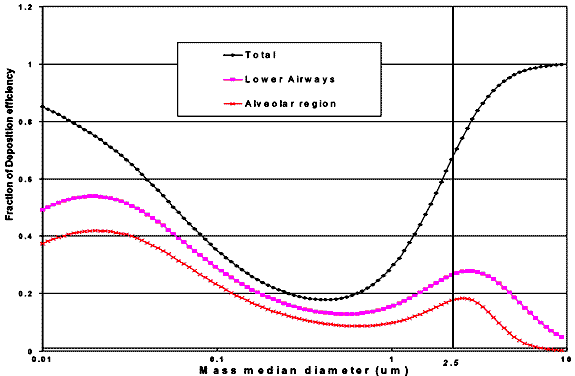
A substantial fraction of inhaled coarse particles is deposited in the airways or lungs. This fraction is substantially greater than for particles in the fine fraction (i.e. 0.1< dae <2.5 µm, see Fig. 4). The difference in tracheobronchial and thoracic deposition fractions between children and adults increases with particle size and is significantly greater for children (ages of 0–15 years old) than for adults.Few investigators have specifically addressed the particle lung doses from fine and coarse PM. Venkataraman & Kao (1999) showed that on a mass basis, the proportion of fine PM being deposited in the pulmonary region is three times larger than the proportion of coarse PM. The number dose to the pulmonary region, however, was five orders of magnitude higher for fine than for coarse PM. This indicates that if effects of PM would even [be] partly related to particle number, the fine fraction completely dominates effects related to pulmonary deposition.
Epidemiology
In the last 15 years, airborne particles have been characterized in many epidemiologic studies by mass concentrations of particles smaller than 10 micrometer in diameter (PM10), because particles of this size can penetrate into the thoracic part of the airways where they may have adverse effects. The more inclusive measure of “Total Suspended Particulates” (TSP) did incorporate larger particles, but was considered to be too unspecific to be used as a basis for air quality standards aimed at protecting human health. Because PM10 often to a large extent consists of particles smaller than a few micrometers, it cannot be easily distinguished in studies from fine particulate matter, often measured as particles smaller than 2.5 micrometers or PM2.5. That is not to say that the concentrations are the same; the issue is that temporal and spatial variation of PM2.5 and PM10 are often similar, despite the difference in sources and composition between fine and coarse particles, simply because PM2.5 is often a large fraction of PM10.Only in recent years has the difference between coarse and fine particles come to be more explicitly appreciated in epidemiologic studies. Investigators have included separate measurements of fine and coarse particles in their studies rather than measurements of PM2.5 and PM10. This has shown that, in contrast to the high correlation between PM10 and PM2.5, there is often much less correlation between PM2.5 and coarse particles, usually defined and measured as particles larger than 2.5 and smaller than 10 micrometer. Of note is that sometimes this quantity is arrived at by subtracting a direct measurement of PM2.5 from a direct measurement of PM10; the disadvantage of this is that “coarse” particle measurement is then affected by two measurement errors rather than one. Other sampling configurations separate fine and coarse particles before they are collected on filters to be weighed, or detected by other means. These recent studies have made it possible to investigate the role of fine and coarse particles without running into the complication that any statement about PM10 is likely to be also valid for (or even dominated by) PM2.5, simply because PM2.5 is such a large fraction of PM10. The observation that the correlation between “fine” and “coarse” particles is often low has made it relatively easy to separate their effects in field studies.
A detailed description of occurrence, measurement and correlations of coarse and fine particles can be found in Wilson & Suh (1997). These authors concluded that “fine and coarse particles are separate classes of pollutants and should be measured separately in research and epidemiologic studies. PM2.5 and PM10–2.5 are indicators or surrogates, but not measurements, of fine particles.” To illustrate the last point, it has been shown that in certain areas windblown dust significantly contributes to PM2.5 (Claiborn et al., 2000).
An early example of a study that addressed fine and coarse PM separately is a study from the United States of America (Schwartz et al., 1996) that found that daily mortality in six cities was associated with fine particles but not with coarse particles. Since then, a body of evidence has emerged that allows further analysis of the relative importance of fine and coarse particles. As there are virtually no studies that have defined “coarse particles” other than PM10–2.5
(occasionally PM15–2.5), what we know about “coarse mass” or CM refers to particles smaller than 10 (or 15) µm, and larger than 2.5 µm. The emphasis is on comparing effect estimates for fine and coarse particles within studies. First we try to answer the question whether there is evidence in recent time series studies of an effect of coarse particles on mortality, independent of effects of fine particles. These studies are ordered by number of observations because the larger the number of observations, the more informative a study is. Where available, the correlations between PM10 and PM2.5, and between PM10 and coarse PM are also given. Some studies have addressed effects of coarse particles on morbidity endpoints. These will also be reviewed.Effects of coarse particles on mortality
The results of time series studies on effects of fine and coarse particles on mortality are summarized in Table 2.Six Cities study, United States of America
The original study by Schwartz et al. (1997) was essentially replicated by Klemm et al. (2000). This is still the study with the largest number of observations, around 190 000 deaths observed over a number of years in six towns in the United States of America. In this study, fine PM was associated with mortality but coarse PM was not. Of interest is that in the one town where CM was found to be associated with mortality (Steubenville), the correlation between FP and CM was high at 0.69. No two-pollutant analysis of these data has been reported.Santiago, Chile
Cifuentes et al. (2000) analysed a large database from Santiago, Chile where PM levels where high. Both FP and CM were associated with mortality, but in a two-pollutant model containing both FP and CM, the association with FP was unchanged, whereas the association with CM all but disappeared.Philadelphia, United States of America
Lipfert et al. (2000) re-analysed data from Philadelphia and surrounding areas, and found associations between mortality and fine and coarse PM of roughly similar magnitude, although the associations with CM were mostly not significant. The paper contains a large number of estimates without standard errors or confidence intervals, the denominator of which is given as “means minus 4th percentile”; there are various means, but no 4th percentiles reported. The Environment Protection Agency’s fourth draft version of the PM criteria document has calculated effect estimates which are in the order of a 1.6% increase in cardiovascular mortality per 10 µg/m3 for both metrics, being significant for fine but not for coarse PM (US EPA, 2003).Eight cities, Canada
In a study conducted in eight Canadian cities, Burnett et al. (2000; 2003) found both fine and coarse PM to be associated with mortality; no attempt was made to adjust these associations for each other. The effect estimates in the Table 2 are from the recent re-analysis report (Burnett et al., 2003). That report contains a variety of estimates, which show fairly similar estimates for fine and coarse mass in the range of 0.6 to 1.5 % increase in mortality for each 10 µg/m3 increase in particle mass. The correlations between PM10 and PM2.5 and coarse mass respectively were much higher than the correlation between fine and coarse PM.Santa Clara County, California, United States of America
Fairley et al. (1999; 2003) analysed a small number of deaths in Santa Clara County, California, and found mortality to be associated with fine but not coarse particles. The effect estimates in the Table 2 are from re-analysed data, using “new GLM”. The correlations between PM10 and PM2.5 and coarse mass respectively were much higher than the correlation between fine and coarse PM.West Midlands Conurbation, United Kingdom
A study from the United Kingdom by Anderson et al. (2001) found no association between mortality and either fine or coarse PM. However, in season-specific analyses there was a significant association with fine but not coarse PM in the warm season. The correlations between PM10 and PM2.5 and coarse mass respectively were much higher than the correlation between fine and coarse PM.Mexico City, Mexico
Castillejos et al. (2000) analysed three years of mortality in a section of Mexico City where coarse PM measurements were available. Both fine and coarse mass were associated with mortality, but in a two-pollutant model, coarse mass was clearly dominant. The authors speculated that there was much biogenic contamination in the coarse mass fraction.Wayne County, Michigan, United States of America
In a small study in Wayne County conducted over the 1992–1994 period, fine and coarse PM were both not significantly associated with mortality. The effect estimate for coarse mass was somewhat larger than for fine mass (Lippmann et al., 2000; Ito et al., 2003). As was found in other investigations, the correlations between PM10 and PM2.5 and coarse mass respectively were much higher than the correlation between fine and coarse PM.Coachella Valley, California, United States of America
In a study conducted in the arid Coachella Valley, Ostro et al. (2000, 2003) found evidence for effects of fine particles (but not coarse particles) on total mortality. When the analysis was restricted to cardiovascular mortality, there was a significant association with coarse but not fine particles, although the effect estimate for fine particles was still much larger than for coarse PM. The results were generally unaffected by model specification (Ostro et al., 2003). In the re- analysis published in 2003, the authors looked at cardiovascular mortality only, so that no comparison is possible with the original report with respect to total mortality. Again, correlations between PM10 and fine and coarse mass respectively were higher than the correlation between fine and coarse PM.Phoenix, Arizona, United States of America
In a small study from Phoenix, Arizona, where coarse PM is higher than fine PM due to arid conditions, both were found to be associated with cardiovascular mortality at lag 0 (Mar et al., 2000, 2003). At lag 1 the association was stronger for fine (7.1% per 10 µg/m3, 95% confidence intervals: 1.1–12.9%) than for coarse particles (1.6% per 10 µg/m3, 95% confidence intervals: 0.5–3.8%). Again, correlations between PM10 and fine and coarse mass respectively were higher than the correlation between fine and coarse PM.Another small study over a one year period in Atlanta has been reported (Klemm et al., 2000), with about 8400 deaths, showing no effect whatsoever although coefficient and t-statistic (t=1.15) for fine PM were larger than for coarse PM (t=0.21).
Schwartz analysed a time series of mortality data from Spokane, Washington where dust storm regularly occur. He found that on dust storm days (which had an average PM10 concentration of 263 µg/m3), there was no increased mortality compared to control days which had an average PM10 concentration of 42 µg/m3 (Schwartz et al., 1999).
The American Cancer Society (ACS) cohort study conducted in the United States found no evidence that coarse PM was associated with mortality over long periods of follow-up (Pope et al., 2002). This is an important observation because the health impact assessments within CAFE and the proposed annual average limit values for fine PM rely in part on the mortality effects seen in this and some other cohort studies.
Conclusion on coarse PM
There is some evidence for effects of coarse PM on mortality. This is most clear in studies from arid regions (Phoenix, Coachella Valley, Mexico City) where PM concentrations are relatively high. Studies from the Detroit area and from Canada also provide some support for an effect of coarse PM on mortality. Few studies have analysed fine and coarse PM jointly. Two studies that did so (from Santiago, Chile, and Santa Clara County, California) showed that effects of coarse PM completely disappeared after adjustment for fine PM. In both studies, the effects of fine PM remained after adjustment for coarse PM. One study from Mexico City found the opposite: coarse PM effects remained, but fine PM effects did not. The correlation between fine and coarse PM in all of these studies was moderate at values between 0.28 and 0.59 with one higher value at 0.69 in Steubenville. In contrast, the correlations between PM10 and fine as well as coarse PM was much larger in all studies. Usually, correlations between PM10 and fine PM were largest, but there were some exceptions, notably from arid areas where PM10 was dominated by coarse PM. The implication is that analyses based on PM10 are generally unable to support statements on the relative importance of fine and coarse PM. The modest correlations between fine and coarse PM on the other hand do allow separation of the two effects. It is unfortunate that so far, all but a few studies have failed to report the results of two-pollutant analyses.There is only one report from Europe at this point. This study from the United Kingdom found no effect of either fine or coarse PM on mortality. However, in the warm season, significant effects of fine but not coarse PM were observed.
The ACS cohort study did not show an effect of spatial variations in coarse particles on mortality.
Effects of coarse particles on morbidity
A study of respiratory hospital admissions from Washington State (Schwartz, 1996) found an association with PM10. This association which was not significantly smaller in the autumn period when PM10 was suggested to be dominated by wind blown dust. One would expect a smaller association if wind blown dust was innocuous. A more recent study from the same area found that asthma hospital admissions were associated with fine as well as coarse particles, which were only moderately correlated at 0.43 (Sheppard et al., 1999).A study from Anchorage, where PM10 is dominated by coarse crustal material, found significant effects of PM10 on outpatient visits for asthma, bronchitis and upper respiratory tract infections (Gordian et al., 1996).
Another study from Washington State found a small increase in respiratory hospital admissions after dust storms during which maximum 24 hour PM10 concentrations exceeded 1000 µg/m3 (Hefflin, 1994). Coefficients were estimated to be about 3–4% per 100 µg/m3, which is not very different from coefficients estimated from large time series studies on PM and hospital admissions.
In a study among school children (Schwartz & Neas, 2000), fine particles were found to be associated with reduced peak flow and increased lower respiratory symptoms. Independently, coarse particles were only associated with increased cough, which was attributed to the irritative potential of coarse particles in the respiratory tract.
In a recent study from Toronto, asthma hospitalizations among 6–12-year-old children were found to be associated with coarse particles more strongly than with fine particles (Lin et al., 2002).
Analyses conducted within the Children’s Health Study in southern California found no evidence of an association between coarse PM and bronchitic symptoms in a prospective assessment of children with asthma (McConnell et al., 2003). In the same study, NO2 and organic carbon were the pollutants most closely associated with symptoms. The correlation between annual average PM2.5 and coarse particles was only 0.24, whereas PM10 was highly correlated with both at 0.79. This analysis took into account both within and between community variations over a four year period. This illustrates that separate assessment of associations with fine and coarse PM is possible when both are actually measured. Earlier publications from this cohort found some evidence of an effect of coarse PM on lung function growth that was inseparable from effects of other particle metrics (Gauderman et al., 2000, 2002). However, in these analyses the within- community variation in air pollution exposures over time was not taken into account, and correlations between PM10, coarse and fine particles were much higher for this reason than in the analysis of bronchitic symptoms among children. In areas of Europe where roads are being sanded, and studded tyres are used in winter, episodes of high so-called “spring dust” concentrations occur when the snow melts. One study from Finland has addressed possible health consequences (Tiittanen et al., 1999). TSP, PM10 and PM2.5 were measured, and coarse mass was estimated by subtracting PM2.5 from PM10. Median concentrations were 57, 28, 15 and 8 µg/m3 respectively, but maximum concentrations were 234, 122, 55 and 67 µg/m3 (24 hour average). Correlations between the different particle metrics were very high at 0.90–0.98 in this study so that they could not be separated in the analysis. Morning peak flow and cough were found to be associated with all of these particle metrics (except TSP which was not analysed) in a panel of asthmatic children. Because of the high correlations between metrics, no firm conclusions with respect to an independent role of coarse PM can be drawn.
In the time series study from the United Kingdom quoted earlier (Anderson et al., 2001), none of the particle metrics analysed had a clear relationship with respiratory and cardiovascular hospital admissions.
A study from eight districts in four cities in China reported that the prevalence of respiratory symptoms in children was more strongly associated with TSP, and with coarse than with fine particles. Mean concentrations were high at 356 µg/m3 for TSP, and 151, 92 and 59 µg/m3 for PM10, PM2.5 and coarse mass respectively (Zhang et al., 2002).
Conclusion on coarse PM and morbidity
A few studies have found associations between respiratory morbidity endpoints and coarse particles in areas where no such associations with mortality were found. Evidence suggests that the irritative potential of coarse particles might be sufficient to cause respiratory morbidity leading to increases in hospital admissions. Some of these studies were conducted in areas where coarse PM is low, e.g. Seattle where the median and 90th percentile of the CM distribution were 14 and 29 µg/m3 respectively (Sheppard et al., 1999).The number of time series studies that have addressed effects of coarse PM seems too limited at the moment to allow derivation of exposure-response relationships. The sparse data reported show that effect estimates were sometimes of the same order as those for fine PM. Application of two-pollutant analyses in databases from which this has not yet been reported is urgently needed to address the question whether effects of coarse PM remain after adjustment for fine PM.
Very few data exist that allow estimates of long term effects of coarse PM on morbidity. One study from China, conducted at high levels of exposure, suggests that the prevalence of respiratory disease among children is especially associated with coarse PM.
Table 2: Summary of time series relating coarse particulate matter to mortality
Source & ©: WHO Regional Office for Europe
The source document for this Digest states:
Answer:
There is strong evidence to conclude that fine particles (< 2.5 µm, PM2.5) are more hazardous than larger ones (coarse particles) in terms of mortality and cardiovascular and respiratory endpoints in panel studies. This does not imply that the coarse fraction of PM10 is innocuous. In toxicological and controlled human exposure studies, several physical, biological and chemical characteristics of particles have been found to elicit cardiopulmonary responses. Amongst the characteristics found to be contributing to toxicity in epidemiological and controlled exposure studies are metal content, presence of PAHs, other organic components, endotoxin and both small (< 2.5 µm) and extremely small size (< 100 nm).
Rationale:
Possibly relevant physical characteristics of PM are particle size, surface and number (which are all related). The smaller the particle, the larger is the surface area available for interaction with the respiratory tract, and for adsorption of biologically active substances.
Epidemiology
Quite a few studies suggest that fine PM is more biologically active than coarse PM (defined as particles between 2.5 and 10 µm in size) (14, 133, 134, 135)) but other studies have also found that coarse PM is associated with adverse health effects (136, 137, 138, 139, 140); the relative importance of fine and coarse PM may depend on specific sources present in some areas but not others. A more extensive discussion of the new literature on PM2.5 can be found in the rationale for the answer given to question 1.The number of ultrafine (< 100 nm) particles in air has been subject to research in recent years, following suggestions (113, 141, 142) that such particles may in particular be involved in the cardiovascular effects often seen to be associated with PM. In addition, vehicular traffic has been shown to be an important source of ultrafine particles, and very high number concentrations have been observed near busy roads, with steep gradients in concentration at distances increasing up to several hundred metres from such roads (143, 144, 145). Insights gained have been that in most situations, the (time series) correlation between PM mass and ultrafine particles is low (146); as a result, associations between PM mass and health endpoints and mortality and morbidity seen in time series studies cannot readily be explained by the action of ultrafine particles. A small number of studies have been conducted on ultrafine particles, some of which suggest associations with mortality and with asthma exacerbations (127, 147, 148, 149, 150). It should be noted that ultrafine particles are inherently unstable in the atmosphere because they coagulate quickly. Exposure assessment based on single ambient monitoring stations is therefore more subject to error than for PM mass. More research is needed to establish the possible links between ultrafine PM sources, exposures and health more accurately and precisely.
Possibly relevant chemical characteristics include the content of transition metals, crustal material, secondary components such as sulphates and nitrates, polycyclic aromatic hydrocarbons and carbonaceous material, reflecting the various sources that contribute to PM in the atmosphere. In general, fine PM (< 2.5 µm) consists to a large extent of primary and secondary combustion products such as elemental and organic carbon, sulphates, nitrates and PAHs. Coarse PM (between 2.5 and 10 µm) usually contains more crustal material such as silicates. So far, no single component has been identified that could explain most of the PM effects. Studies from Utah Valley have suggested that close to steel mills, transition metals could be important (151, 152, 153, 154); in urban situations with lower transition metal concentrations, this has not yet been clearly established. Few large-scale epidemiological studies have addressed the role of specific particle metals; work from Canada suggested that iron, zinc and nickel may be especially important (125).
Other studies, using source apportionment techniques, have pointed to traffic and coal combustion as important sources of biologically active PM (53, 155). In many time series and in some of the cohort and cross sectional studies, sulphates are found to predict adverse effects well (13, 51, 77, 135, 138, 156, 157, 158, 159, 160). It has been suggested that this may be related to interactions between sulphate and iron in particles (161) but it should be pointed out that in animal experiments, it has generally not been possible to find deleterious effects of sulphate aerosols even at concentrations much higher than ambient (162, 163).
Toxicology
Many toxicological studies, both in vivo and in vitro and in human as well as in animal systems, have attempted to determine the most important characteristics of PM for inducing adverse health effects. Some studies have demonstrated the importance of particle size (ultrafine vs. fine vs. coarse particles), surface area, geometric form, and other physical characteristics. Others have focused on the importance of the non-soluble versus soluble components (metals, organic compounds, endotoxins, sulphate and nitrate residues). The relative potency of the different characteristics will differ for the various biological endpoints, such as cardiovascular effects, respiratory inflammation/allergy and lung cancer. The importance of the different determinants will vary in urban settings with different PM profiles. Thus, it is likely that several characteristics of PM are crucial for the PM-induced health effects and none of the characteristics may be solely responsible for producing effects.Particle size: Studies with experimental animals have shown that both the coarse, fine and ultrafine fractions of ambient PM induce health effects (113, 129, 164). On a mass basis, small particles generally induce more inflammation than larger particles, due to a relative larger surface area (165). The coarse fraction of ambient PM may, however, be more potent to induce inflammation than smaller particles due to differences in chemical composition (129). Experimentally, inhaled ultrafine particles have been demonstrated to pass into the blood circulation and to affect the thrombosis process (45, 46). The molecular and pathophysiological mechanisms for any PM-induced cardiovascular effects are largely unknown.
Metals: There is increasing evidence that soluble metals may be an important cause of the toxicity of ambient PM. This has been shown for the ambient air in Utah Valley, where a steel mill is a dominant source (72, 166, 167). Furthermore, water-soluble metals leached from residual oil fly ash particles (ROFA) have consistently been shown to contribute to cell injury and inflammatory changes in the lung (65, 154). The transition metals are also important components concerning PM-induced cardiovascular effects (65). Transition metals potentiate the inflammatory effect of ultrafine particles (168). However, it has not been established that the small metal quantities associated with ambient PM in most environments are sufficient to cause health effects. Metals considered to be relevant are iron, vanadium, nickel, zinc and copper (8). In a comparative study of pulmonary toxicity of the soluble metals found in urban particulate dust from Ottawa, it has recently been reported that zinc, and to a lesser degree copper, induced lung injury and inflammation, whereas the responses to the nickel, iron, lead and vanadium were minimal (169).
Organic compounds: Organic compounds are common constituents of combustion-generated particles, and comprise a substantial portion of ambient PM. A number of organic compounds extractable from PM (especially PAHs) should be considered to exert pro-inflammatory as well an adjuvant effects (170, 171). Some of the PAHs and their nitro-and oxy-derivatives have been shown to be mutagenic in bacterial and mammalian systems and carcinogenic in animal studies, but most of the organic compounds responsible for the majority of the mutagenicity of ambient air have not been identified (3, 8).
Endotoxins: The bacterial endotoxins (lipopolysaccharides), known to exert inflammatory effects, are virtually ubiquitous and have been shown to be present in both indoor and outdoor PM, but mainly in the coarse (PM10) fraction (172). The endotoxins may contribute to the health effects of urban air particulates, although this has not been shown at lower concentrations. As mentioned before, recent evidence has implicated endotoxin especially in the biological activity of coarse PM (130).
Acidic aerosols: Acidic aerosols have been shown to elicit increased airway responsiveness in asthmatics. These effects are, however, only seen with highly acidic particles (sulphuric acid aerosols) at concentrations many times above ambient levels (173).
Source & ©: WHO Regional Office for Europe
The source document for this Digest states:
Answer:
Few epidemiological studies have addressed interactions of PM with other pollutants. Toxicological and controlled human exposure studies have shown additive and in some cases, more than additive effects, especially for combinations of PM and ozone, and of PM (especially diesel particles) and allergens. Finally, studies of atmospheric chemistry demonstrate that PM interacts with gases to alter its composition and hence its toxicity.
Rationale:
Synergistic and antagonistic interactions are difficult to estimate in epidemiological studies, because they usually require large sample sizes to establish them with sufficient confidence. Perhaps the best example to quote here is APHEA2 that found that PM effects on mortality were stronger in areas with high NO2 (29). But even this finding, although formally pointing to positive interaction, has been interpreted more as showing that in areas with high NO2, PM likely contains more noxious substances than in areas with low NO2.
The evidence of potentiation/synergy (more than additive) is clearer from experimental studies, especially for interactions between PM and ozone. Ozone has been found to increase lung permeability in both animals and human, as well as to increase bronchial hyper-responsiveness. It is therefore expected that combined exposure to ozone and PM would have a more than additive effect. Results from several animal studies with PM show an increase in response with co-exposure to ozone (141, 174, 175). From the single controlled human exposure study available, it was found that combined exposure to a mixture of concentrated ambient particles and ozone may produce vasoconstriction (176). However, no pulmonary endpoints were examined, and the effects of PM and ozone were not evaluated separately. Therefore, the study gives little information on potentiation/synergy between PM and ozone. There are few studies concerning any interaction of PM with single pollutants other than ozone. Interactions of particles and allergens have been studied in controlled human exposure studies and animal experiments. In animals, adjuvant effects of particles including diesel exhaust particles, have been demonstrated (96, 177). Furthermore, adjuvant effects have also been observed in humans using diesel exhaust particles (178). It is also possible that some interactions could be adaptive. For example, chronic exposure to SO2 causes mucus hyper-secretion and airway narrowing. This would provide a thicker protective mucus barrier and potentially make it more likely that co- exposure to particles would involve more central deposition and more rapid clearance. Similarly, pre-exposure to ozone could up-regulate antioxidant enzymes and thus partially protect against oxidative injury elicited by PM. In principle, answering the present question is possible with animal studies, but too few investigations utilising mixtures have been carried out (179).
Source & ©: WHO Regional Office for Europe
The source document for this Digest states:
Answer:
In short-term studies, elderly subjects, and subjects with pre-existing heart and lung disease were found to be more susceptible to effects of ambient PM on mortality and morbidity. In panel studies, asthmatics have also been shown to respond to ambient PM with more symptoms, larger lung function changes and with increased medication use than non-asthmatics. In long-term studies, it has been suggested that socially disadvantaged and poorly educated populations respond more strongly in terms of mortality. PM also is related to reduced lung growth in children. No consistent differences have been found between men and women, and between smokers and non-smokers in PM responses in the cohort studies.
Rationale:
The very young and the very old, as well as persons with lower socio-economic status are apparently especially affected by PM air pollution. In the time series studies, it has been well established that elderly subjects (and possibly, very young children) are more at risk than the remainder of the population (105). Subjects with pre-existing cardiovascular and respiratory disease are also at higher risk (38, 106). This is similar to the experiences of the populations exposed to the London 1952 smog episode, despite the fact that exposures were in the mg/m3 rather than in the g/m3 range then. Children with asthma and bronchial hyper-responsiveness have also been shown to be more susceptible to ambient PM (107, 108) although effects have been observed in non-symptomatic children as well. In addition, low socio-economic status seems to convey higher risks for morbidity associated with PM in short term studies (109). With exercise, deposition patterns of particles change, and it has been shown that the fractional deposition of ultrafine particles is particularly increased with exercise (110). In the cohort studies from the United States of America there was no difference in air pollution risks between smokers and non-smokers.
In the HEI re-analysis project, the subjects’ characteristics were addressed in detail as determinants of PM-mortality associations. An intriguing finding was that effects of PM on mortality seemed to be restricted largely to subjects with low educational status (10). This finding was repeated in the Dutch cohort study (12) and in the further ACS follow-up (13). In the AHSMOG study, subjects classified as having low antioxidant vitamin intake at baseline were found to be at higher risk of death due to PM air pollution than subjects with adequate intakes (9, 111). It seems that attributes of poor education (possibly nutritional status, increased exposure, lack of access to good-quality medical care and other factors) may modify the response to PM.
Controlled human exposure studies and studies on animals with age-related differences or certain types of compromised health, have also shown differences in susceptibility to PM exposure (56, 66, 70, 112, 113, 114). Results suggest that effects of particles on allergic immune responses may differ between healthy and diseased individuals, but the relative importance of genetic background and pre-existing disease is not clear. Age-related differences in rodents exhibit differences in susceptibility that do not provide a clear picture at present. Molecular studies of humans, animals and cells indicate the importance of a number of susceptibility genes and their products. For lung cancer certain growth-, cell death-, metabolism- and repair-controlling proteins may in part explain differences in susceptibility (115). For other lung diseases related to radical production and inflammation, proteins such as surfactant proteins and Clara cell protein (116) may play an important role and thus contribute to differences in susceptibility.
Some studies using high exposures to PM indicate that animals with pre-existing cardiovascular disease are at greater risk for exacerbation of their disease than their healthy counterparts (44, 70, 112).
Although factors such as lifestyle, age and pre-existing disease seem to be emerging as susceptibility parameters, and certain gene products may partly explain individual variation in susceptibility, the issue of inter-individual susceptibility to PM still needs further research adequately to describe susceptibility characteristics. Adequate animal models have been difficult to develop, and there are still difficulties in extrapolating results from animal studies to the human situation.
Source & ©: WHO Regional Office for Europe
The source document for this Digest states:
Answer:
Epidemiological studies on large populations have been unable to identify a threshold concentration below which ambient PM has no effect on health. It is likely that within any large human population, there is such a wide range in susceptibility that some subjects are at risk even at the lowest end of the concentration range.
Rationale:
The results from short-term epidemiological studies suggest that linear models without a threshold may well be appropriate for estimating the effects of PM10 on the types of mortality and morbidity of main interest. This issue has been formally addressed in a number of recent papers (26, 97, 98). Methodological problems such as measurement errors (99, 100) make it difficult to precisely pinpoint a threshold if it exists; effects on mortality and morbidity have been observed in many studies conducted at exposure levels of current interest. If there is a threshold, it is within the lower band of currently observed PM concentrations in Europe. As PM concentrations are unlikely to be dramatically reduced in the next decade, the issue of the existence of a threshold is currently of more theoretical than practical relevance.
At high concentrations as they may occur in episodes or in more highly polluted areas around the world, linearity of the exposure response relationship may no longer hold. Studies (98, 101) suggest that the slope may become more shallow at higher concentrations, so that assuming linearity will over-estimate short-term effects at high concentration levels.
The results from studies of long-term exposures also suggest that an exposure-response relationship down to the lowest observed levels seems to be appropriate. Graphs presented in the recently published further follow-up of the ACS cohort (13) suggest that for cardiopulmonary mortality, and especially for lung cancer mortality, the risk was elevated even at (long-term) PM2.5 levels below 10 g/m3. The graphs presented in the ACS cohort paper suggest that at the lowest concentrations, the exposure-response relationships for lung cancer and cardiopulmonary deaths were even somewhat steeper than at higher concentrations, but uncertainties in the exposure-response data preclude firm conclusions as to non-linearities of the relationships.
In the lung, different defence mechanisms exist that can deal with particles. Particles may be removed without causing damage, potentially damaging particle components may be neutralized, reactive intermediates generated by particles may be inactivated or damage elicited by particles may be repaired. Based on a mechanistic understanding of non-genotoxic health effects induced by particles, the existence of a threshold because of these defence mechanisms is biologically plausible. However, the effectiveness of defence mechanisms in different individuals may vary and therefore a threshold for adverse effects may be very low at the population level in sensitive subgroups. A range of thresholds may exist depending on the type of effect and the susceptibility of individuals and specific population groups. Individuals may have thresholds for specific responses, but they may vary markedly within and between populations due to inter-individual differences in sensitivity. At present it is not clear which susceptibility characteristics from a toxicological point of view are the most important although it has been shown that there are large differences in antioxidant defences in lung lining fluid between healthy subjects (102, 103, 104). The toxicological data on diesel exhaust particles in healthy animals may indicate a threshold of response (86, 87), whereas the data on compromised animals are too scarce to address this issue properly.
Source & ©: WHO Regional Office for Europe
See also: General Issues and Recommendations on Air Pollutants:
- Question 5.3 on uncertainties in defining thresholds
- Question 7.1 recommendations regarding the concept of threshold



This summary is free and ad-free, as is all of our content. You can help us remain free and independant as well as to develop new ways to communicate science by becoming a Patron!

 BECOME A PATRON!