

Languages:

The source document for this Digest states:
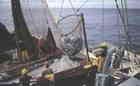
Purse seiner, France
Source: FAOFisheries and aquaculture play, either directly or indirectly, an essential role in the livelihoods of millions of people around the world. In 2006, 43.5 million people were directly engaged, part time or full time, in primary production of fish, either by fishing or in aquaculture (Table 5). They accounted for 3.2 percent of the 1.37 billion people economically active in agriculture worldwide. In the last three decades, employment in the primary fisheries sector has grown faster than the world’s population and employment in traditional agriculture. Eighty-six percent of the fishers and fish farmers worldwide are located in Asia, with China having the most (8.1 million fishers and 4.5 million fish farmers, see Table 6). Fishery employment in China experienced strong increases in the 1980s and 1990s to peak at 13.7 million people in 2001. The number of fishers and fish farmers then declined by 8 percent in the period 2001–06, mainly in the number of people engaged in capture fisheries. In 2006, other countries with a significant number of fishers and fish farmers were India, Indonesia, the Philippines and Viet Nam. Most fishers are small-scale, artisanal fishers, operating on coastal and inland fishery resources.
In recent decades, major increases in the total number of people engaged in fisheries and aquaculture have come from the development of aquaculture activities. Aquaculture can provide an important source of livelihood for the rural poor, generating income through direct sales of aquatic products, in processing and by providing ancillary services. In 2006, the estimated number of fish farmers was nearly 9 million people, with 94 percent operating in Asia. This figure is indicative only, as some countries do not collect employment data separately for the two sectors, and some other countries’ national systems do not yet account for fish farming.
Table 7 compares fish production by continent with the number of people employed in the primary sector. It illustrates the numbers of people involved and the different scales of operations. The highest concentration of people employed is in Asia, but average production per person there is only 2.5 tonnes per year, whereas it is more than 21 tonnes in Europe and nearly 20 tonnes in North America. The high figure for Oceania in part reflects the incomplete reporting by many countries of this continent. The figures on production per person indicate the degree of industrialization of fishing activities, and also the key role played by small-scale fisheries in Africa and Asia.
While the number of people employed in fisheries and aquaculture has been growing steadily in most low-income and middle-income countries, employment in the sector has fallen or remained stationary in most industrialized economies. In Japan and Norway, the numbers of fishers have more than halved since 1970, down 61 and 42 percent, respectively. In many industrialized countries, the decline has occurred mainly in capture fisheries, while the number of fish farmers has increased. In 2006, the estimated number of fishers in industrialized countries was about 860 000, representing a decline of 24 percent compared with 1990. In recent decades, growing investment in onboard equipment, resulting in higher operational efficiencies and less need for seagoing personnel, has led to a significant decline in the number of people employed at sea. This has led to a rapid decline in recruitment in capture fisheries.
In industrialized countries, younger workers seem reluctant to go to sea on fishing vessels. For many young people, neither the salaries nor the quality of life aboard fishing vessels compares favourably with those of land-based industries. Moreover, widespread concerns about the status of stocks may contribute to the view that capture fisheries have an uncertain future. As a result, fishing firms in industrialized countries have begun to look elsewhere when recruiting personnel. In Europe, fishers from the economies in transition or from developing countries are starting to replace local fishers. In Japan, foreign workers have been allowed to work on Japanese distant- water fishing vessels under the “maru-ship system”. 8
A characteristic feature of employment in the fishing industry is the prevalence of occasional or part-time employment, peaking in the months of the year when riverine, coastal and offshore resources are more abundant or available, but leaving time in seasonal lows for other occupations. This is especially true in fisheries for migratory species and those subject to seasonal weather variations. In fact, in the past three decades, the number of full-time fishers has declined while the number of part-time fishers has grown quite rapidly. This trend has been particularly marked in Asia.
In 2006, in addition to the estimated 43.5 million part-time and full-time fishers, about 4 million occasional fishers and fish farmers were reported to FAO (2.5 million from India).
The fisheries sector, including aquaculture, is an important source of employment and income. However, employment in fishing and fish farming cannot be taken as the only indication of the importance of fisheries to a national economy. In addition to fishers and fish farmers involved in direct primary production of fish, there are people involved in other ancillary activities, such as processing, net and gear making, ice production and supply, boat construction and maintenance, manufacturing of fish- processing equipment, packaging, marketing and distribution. Others are involved in research, development and administration connected with the fishery sector. No official data exist on the estimated numbers of people involved in these other activities. Some estimations indicate that, for each person employed in capture fisheries and aquaculture production, there are about four jobs produced in the secondary activities, including post-harvest, for a total of more than 170 million jobs in the whole fishery industry. However, each jobholder on average provides for three dependants or family members. Thus, fishers, aquaculturists and those supplying services and goods to them assure the livelihoods of a total of about 520 million people, 7.9 percent of the world population.
Women play an important role both as workers in the fisheries sector and in ensuring household food security. Generally, they possess an in-depth understanding and knowledge of the natural environment and its resources. Millions of women around the world, especially in developing countries, work in the fisheries sector. Women participate as entrepreneurs and by providing labour before, during and after the catch in both artisanal and commercial fisheries. Their labour often consists of making and mending nets, baskets and pots, and baiting hooks. In fishing, women are rarely engaged in commercial offshore and deep-sea waters, but more commonly involved in fishing from small boats and canoes in coastal or inland waters – harvesting bivalves, molluscs and pearls, collecting seaweed and setting nets or traps. Women also play an important role in aquaculture, where they attend to fish ponds, feed and harvest fish, and collect prawn larvae and fish fingerlings. However, their most important role in both artisanal and industrial fisheries is at the processing and marketing stages. In some countries, women have become important entrepreneurs in fish processing; in fact, most fish processing is performed by women, either in their own cottage-level industries or as wage labourers in the large-scale processing industry. However, as much of this work remains invisible in available statistics, it goes unrecognized, and it is not possible to obtain a comprehensive picture of the role of women in the fisheries sector. This prevents them from obtaining due recognition in public efforts to develop the sector.
8 A “maru-ship” is a Japanese ship operated partially by a non-Japanese crew.
Source & ©: FAO Fisheries – The State of World Fisheries and Aquaculture, 2008
PART 1:World review of fisheries and aquaculture, Fishers and fish
farmers, p. 23-26
The source document for this Digest states:
In 2007, FAO obtained data on national fishing fleets from 97 countries (slightly fewer than half of those catching fish) either through direct reporting or through disseminated statistics. The quality of the data varies widely from quite fragmented records to consistent and continuous statistics over several years. Some data reported to FAO are based on national registers and/or other administrative records. However, these registers often do not cover small boats, especially those used in inland waters. Such craft are often not subject to compulsory registration. Even if they are, where the registers concerned are managed by provincial or municipal authorities, they are easily overlooked in reporting at the national level. In addition, registers and administrative records often include non-operational units. Taking these factors into consideration, the currently available information has only limited value for monitoring and detecting global trends in fishing capacity, and the figures reported in this section should only be considered indicative where they represent global trends.
Quite a large number of non-motorized boats are engaged in fishing operations, usually inshore or on inland waters. For the reasons already described, information about this category of vessel is generally lacking. In the past two years, very little information has been received about the non-motorized fleets. Therefore, there has been no attempt to update the estimate made when preparing The State of World Fisheries and Aquaculture 2006.
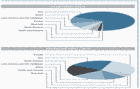
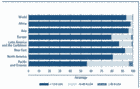
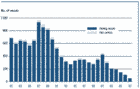
The number of engine-powered fishing vessels is estimated to have been about 2.1 million in 2006, with almost 70 percent of them in Asia (Figure 16). Of the remaining vessels, most were reported to be fishing in Africa, followed by Europe, the Near East, and Latin America and the Caribbean. As almost 90 percent of the motorized fishing vessels in the world are less than 12 m in length, such vessels dominate everywhere, particularly in Africa, Asia and the Near East. The fishing fleets in the Pacific region and in Oceania, Europe and North America tend to consist of vessels that are, on average, slightly larger. This characteristic is confirmed by the distribution of industrialized fleets (vessels of more than 100 GT, roughly more than 24 m in length, extracted from the Lloyd’s Fairplay database), which shows them as being rather evenly distributed among Asia, Europe, Latin America and the Caribbean, and North America (Figure 17). Correspondingly, there is a higher proportion of vessels of more than 100 GT in the Europe, Latin America and the Caribbean, and North America regions than in the Africa and Asia regions. This situation is reflected in the estimated average annual catches per vessel, which are lower in the Asia and Africa regions than elsewhere.
Lloyd’s database indicated that about 23 000 industrialized fishing vessels (for a total of 9.9 million GT) and 740 fish carriers (for a total of slightly less than 1.0 million GT) were operational at the end of 2007. The number of industrialized fishing vessels under the flag of the United States of America, about 3 300, was larger than that reported by any other nation. However, vessels under the flag of the Russian Federation accounted for the largest fleet in terms of gross tonnage, at 1.5 million tonnes (16 percent of the world total). The differences between these two fleets probably reflect the historical development of fishing capacity in the two countries. In the 1980s, the Soviet Union, of which the Russian Federation was then a part, had a centrally planned economy. On a production line basis, it built a fleet of large fishing vessels and fishery support vessels with the ability to operate in distant waters. The United States of America developed a fleet owned and built by individual entrepreneurs to their own specifications with an emphasis on the capacity to harvest local coastal stocks. Despite the changes brought about by the United Nations Convention on the Law of the Sea with regard to fisheries jurisdictions in the early 1980s, a similar pattern of vessel construction continued for a decade into the early 1990s. Some East European countries, e.g. Romania and Ukraine, also employ large vessels. The largest average size – 2 400 GT – was reported for the Belize-flagged fleet. Up to 8.5 percent of the vessels (8.9 percent in terms of total gross tonnage) in the database were recorded as having an “unknown” flag. This is a fleet larger than all national fleets with the exception of that of the United States of America. This “unknown” category has expanded quickly in recent years in spite of global efforts to eliminate IUU fishing activities. The database shows what a vessel’s flag was before it became “unknown”. In order of frequency, flags included in this category are those of Belize, the Russian Federation, Japan, Panama and Honduras. Correspondingly, Belize, the Russian Federation and Japan have reported a substantial reduction in their industrial fishing fleets since 2001. The vessels in the “unknown” category show a relatively high average age (31.4 years), so some of those vessels that have left the national registers – and are now classified as of “unknown” flag – might no longer be in operational condition.
The Russian Federation and China account for the largest share (35 percent) of fish carriers with 140 and 120 vessels, respectively. However, in tonnage terms, Panama, the Russian Federation and Belize dominate. Vessels flying one of these three flags account for more than 60 percent of the world’s gross tonnage of fish carriers. Carriers under the flags of Belize, Cyprus or Panama are large; the average fish carrier in these fleets is 7 000–11 000 GT.
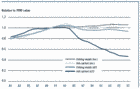
Figure 18 shows changes in the numbers and GT of industrialized fishing vessels and fish carriers of more than 100 GT relative to the 1990 levels extracted from the Lloyd’s database. The numbers of both fishing vessels and fish carriers have stayed around the same level in the last ten years. While the size of the fishing fleet has declined slightly in terms of GT, the fleet of fish carriers in 2006 had fallen to less than half that of 1990. This implies that recently built fish carriers have been much smaller than their predecessors. In addition, scrapped vessels have on the whole been much larger (fishing vessels at 1 100 GT and fish carriers at 5 000 GT) than those built to replace them. These new vessels have averaged about 540 GT for fishing vessels and 590 GT for fish carriers. The average size of newly built vessels has remained relatively stable with some fluctuations in the last ten years. There have been suggestions that the recent rapid rise in fuel prices will increase the use of fish carriers in an attempt to cut overall fuel costs by reducing the time fishing vessels spend travelling to and from the fishing grounds. However, the recent change in the fleet size of fish carriers does not seem to support this view. The number of new fishing vessels being built declined substantially in the late 1980s, when it fell to about half of the previous level. It stayed at about this level until 2001 but has since declined substantially (Figure 19). Currently, the average age of operational fishing vessels is 27.4 years, and that for fish carriers is 22.9 years.
The issues of overcapacity in fishing fleets and their reduction to the levels that should be in balance with long-term sustainable exploitation of resources have received global attention in the past two decades. Many countries have adopted policies to limit the growth of national fishing capacity in order to protect aquatic resources and make fishing economically viable for the harvesting enterprises.
The State of World Fisheries and Aquaculture 2006 reported on attempts by China and the European Union (EU) to limit and control the capacity of their fishing fleets. The “Entry-Exit” scheme, briefly described in that edition, remains in force for EU members. The European Economic Area (EEA) reported declining fleets for EU members in the three years following its introduction in 2003. However, for EEA 18,9 the rates of decline in number of vessels – about 3.2 percent annually – seem unaffected by the “Entry-Exit” scheme. However, a decline in GT terms has occurred. The annual rate of decline increased from 0.8 percent in the period 1998–2003 to about 2.1 percent thereafter. The enlargement of the EU by ten countries10 in 2004 made a larger number of fishing vessels subject to the “Entry-Exit” scheme. The fishing fleets of these new members have shown a faster fall in fishing capacity than those of the original 15 members.11 The combined fleet shrank by 3.1 percent annually in terms of numbers of vessels and by 3.5 percent annually in GT terms in the period 2004–06.
China’s five-year programme to de-license and scrap 30 000 fishing vessels ended at the beginning of 2008. It is unclear how many vessels were scrapped under the programme. Whatever its achievements, it appears that the fleet of commercial vessels in China continues to expand. Official data record an annual increase in vessel numbers of about 3.5 percent for the period 2002–06.
9 EEA 18 consists of EU 15 (Austria, Belgium, Denmark, Finland, France, Germany, Greece, Ireland, Italy, Luxembourg, Netherlands, Portugal, Spain, Sweden and United Kingdom) plus Iceland, Liechtenstein and Norway.
10 The ten new EU members: Cyprus, Czech Republic, Estonia, Hungary, Latvia, Lithuania, Malta, Poland, Slovakia and Slovenia. No fleet data available for the land-locked countries (Czech Republic, Hungary and Slovakia).
11 For the EEA 18 members, no fleet report is available for the land-locked countries (Austria, Liechtenstein and Luxembourg.
Source & ©: FAO Fisheries – The State of World Fisheries and Aquaculture, 2008
PART 1:World review of fisheries and aquaculture, The status of the
fishing fleet, p. 26-30



This summary is free and ad-free, as is all of our content. You can help us remain free and independant as well as to develop new ways to communicate science by becoming a Patron!

 BECOME A PATRON!