

Languages:

The source document for this Digest states:
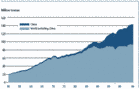
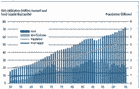
Capture fisheries and aquaculture supplied the world with about 110 million tonnes of food fish in 2006 (all data presented are subject to rounding), providing an apparent per capita supply of 16.7 kg (live weight equivalent), which is among the highest on record (Table 1 and Figure 1). Of this total, aquaculture accounted for 47 percent. Outside China, per capita supply has shown a modest growth rate of about 0.5 percent per year since 1992 (following a decline from 1987), as growth in supply from aquaculture more than offset the effects of static capture fishery production and a rising population (Table 2 and Figure 2). In 2006, per capita food fish supply was estimated at 13.6 kg if data for China are excluded. Overall, fish provided more than 2.9 billion people with at least 15 percent of their average per capita animal protein intake. The share of fish proteins in total world animal protein supplies grew from 14.9 percent in 1992 to a peak of 16.0 percent in 1996, declining to about 15.3 percent in 2005. Notwithstanding the relatively low fish consumption by weight in low-income food-deficit countries (LIFDCs) of 13.8 kg per capita in 2005, the contribution of fish to total animal protein intake was significant – at 18.5 percent – and is probably higher than indicated by official statistics in view of the under-recorded contribution of small- scale and subsistence fisheries.
China remains by far the largest producer, with reported fisheries production of 51.5 million tonnes in 2006 (17.1 and 34.4 million tonnes from capture fisheries and aquaculture, respectively), providing an estimated domestic food supply of 29.4 kg per capita as well as production for export and non-food purposes. However, there are continued indications that capture fisheries and aquaculture production statistics for China may be too high, as noted in previous issues of The State of World Fisheries and Aquaculture,1 and that this problem has existed since the early 1990s. Because of the importance of China and the uncertainty about its production statistics, as in previous issues of this report, China is generally discussed separately from the rest of the world. In 2008, China indicated that it was working to revise its fishery and aquaculture production statistics downwards based on the outcome of the National Agricultural Census of 2006, which included for the first time questions relating to fisheries and aquaculture, as well as fishery surveys. Revised statistics for a period of years are expected to be made available by 2009 and to be reflected subsequently in FAO statistics and in future issues of The State of World Fisheries and Aquaculture.
In 2008, China reported a downward revision of total fishery and aquaculture production for 2006 of more than 10 percent, corresponding to a reduction of more than 2 million tonnes in capture production and more than 3 million tonnes in aquaculture production. Preliminary estimates for 2007 based on reporting by some major fishing countries indicate that world fishery production excluding China is 96 million tonnes, representing approximately a 3 percent increase for capture production and a 7 percent increase for aquaculture production compared with 2006.
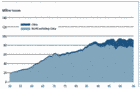
Global capture fisheries production in 2006 was about 92 million tonnes, with an estimated first-sale value of US$91.2 billion, comprising about 82 million tonnes from marine waters and a record 10 million tonnes from inland waters (Table 1 and Figure 3). China, Peru and the United States of America remained the top producing countries. World capture fisheries production has been relatively stable in the past decade with the exception of marked fluctuations driven by catches of anchoveta – a species extremely susceptible to oceanographic conditions determined by the El Niño Southern Oscillation – in the Southeast Pacific (Figure 3). Fluctuations in other species and regions tend to compensate for each other to a large extent. China remains by far the global leader with more than 17 million tonnes in 2006. Asian countries accounted for 52 percent of the global capture production. Overall catches in the Western Central Pacific and in the Western Indian Ocean continued to increase, whereas capture production decreased in both the Western and Eastern Central areas of the Atlantic Ocean. In the Eastern Indian Ocean, total catches in 2006 returned to growth after the decrease in 2005 caused by the destructive effects of the tsunami of December 2004. Catches from inland waters, almost two-thirds of which were taken in Asia in 2006, have shown a slowly but steadily increasing trend since 1950, owing in part to stock enhancement practices and possibly also to improved reporting.
Aquaculture continues to be the fastest growing animal food-producing sector and to outpace population growth, with per capita supply from aquaculture increasing from 0.7 kg in 1970 to 7.8 kg in 2006, an average annual growth rate of 6.9 percent. It is set to overtake capture fisheries as a source of food fish. From a production of less than 1 million tonnes per year in the early 1950s, production in 2006 was reported to be 51.7 million tonnes with a value of US$78.8 billion, representing an annual growth rate of nearly 7 percent. World aquaculture is heavily dominated by the Asia–Pacific region, which accounts for 89 percent of production in terms of quantity and 77 percent in terms of value. This dominance is mainly due to China’s enormous production, which accounts for 67 percent of global production in terms of quantity and 49 percent of global value. China produces 77 percent of all carps (cyprinids) and 82 percent of the global supply of oysters (ostreids). The Asia–Pacific region accounts for 98 percent of carp, 95 percent of oyster production, and 88 percent of shrimps and prawns (penaeids). Norway and Chile are the world’s two leading producers of cultured salmons (salmonids), accounting for 33 and 31 percent, respectively, of world production. Aquatic plant production by aquaculture in 2006 was 15.1 million tonnes. The culture of aquatic plants has increased consistently, with an average annual growth rate of 8 percent since 1970. In 2006, it contributed 93 percent of the world’s total supply of aquatic plants, or 15.1 million tonnes (US$7.2 billion), some 72 percent of which was produced by China. However, growth rates for aquaculture production are slowing, partly owing to public concerns about aquaculture practices and fish quality. Genetically modified organisms (GMOs) remain a controversial issue. In response to these concerns, integrated multitrophic aquaculture (which promotes economic and environmental sustainability) and organic aquaculture are on the rise.
Fisheries and aquaculture, directly or indirectly, play an essential role in the livelihoods of millions of people around the world. In 2006, an estimated 43.5 million people were directly engaged, part time or full time, in primary production of fish either in capture from the wild or in aquaculture, and a further 4 million people were engaged on an occasional basis (2.5 million of these in India). In the last three decades, employment in the primary fisheries and aquaculture sector has grown faster than the world’s population and employment in traditional agriculture. Eighty- six percent of fishers and fish farmers worldwide live in Asia, with China having the greatest numbers (8.1 million fishers and 4.5 million fish farmers). In 2006, other countries with a significant number of fishers and fish farmers were India, Indonesia, the Philippines and Viet Nam. Most fishers and fish farmers are small-scale, artisanal fishers, operating on coastal and inland fishery resources. Currently, fleet-size reduction programmes in China and other countries, aimed at tackling overfishing, are reducing the number of full-time and part-time fishers. Globally, the number of people engaged in capture fisheries declined by 12 percent in the period 2001–06. On the other hand, in recent decades, major increases in the total number have come from the development of aquaculture activities. In 2006, the estimated number of fish farmers was nearly 9 million people, with 94 percent operating in Asia. For each person employed in the primary sector, it has been estimated that there could be four employed in the secondary sector (including fish processing, marketing and service industries), indicating employment of about 170 million in the whole industry. Taking account of dependants, about 520 million people could be dependent on the sector, or nearly 8 percent of the world population.
The number of fishing vessels powered by engines is estimated to have been about 2.1 million in 2006, of which almost 70 percent were concentrated in Asia. Of the remaining vessels, most were accounted for by Africa, followed by Europe, the Near East, Latin America and the Caribbean. As almost 90 percent of motorized fishing vessels in the world are less than 12 metres long, such vessels dominate everywhere, particularly in Africa, Asia and the Near East. The fishing fleets in the Pacific region, Oceania, Europe and North America tend to consist of vessels that, on average, are slightly larger. This characteristic is confirmed by the distribution of industrialized fleets (vessels of more than 100 gross tonnage [GT], roughly more than 24 m long, extracted from Lloyds Fairplay database), which shows them as rather evenly distributed among Asia, Europe, Latin America and the Caribbean, and North America. Correspondingly, there is a higher proportion of vessels of more than 100 GT in the Europe, North America and Latin America and Caribbean regions than in the Africa and Asia regions. Fleet reduction schemes have had mixed success. The numbers of both fishing vessels and fish carriers have stayed around the same level in the last ten years. While the size of the fishing fleet has declined slightly in terms of gross tonnage, the fleet of fish carriers in 2006 was less than half that of 1990, as recently built fish carriers have been much smaller than their predecessors. Moreover, scrapped vessels have on the whole been much larger than those built to replace them.
An overall review of the state of marine fishery resources confirms that the proportions of overexploited, depleted and recovering stocks have remained relatively stable in the last 10–15 years, after the noticeable increasing trends observed in the 1970s and 1980s with the expansion of fishing effort. In 2007, about 28 percent of stocks were either overexploited (19 percent), depleted (8 percent) or recovering from depletion (1 percent) and thus yielding less than their maximum potential owing to excess fishing pressure. A further 52 percent of stocks were fully exploited and, therefore, producing catches that were at or close to their maximum sustainable limits with no room for further expansion. Only about 20 percent of stocks were moderately exploited or underexploited with perhaps a possibility of producing more. Most of the stocks of the top ten species, which together account for about 30 percent of world marine capture fisheries production in terms of quantity, are fully exploited or overexploited. The areas showing the highest proportions of fully-exploited stocks are the Northeast Atlantic, the Western Indian Ocean and the Northwest Pacific. Overall, 80 percent of the world fish stocks for which assessment information is available are reported as fully exploited or overexploited and, thus, requiring effective and precautionary management. As stated before in The State of World Fisheries and Aquaculture, the maximum wild capture fisheries potential from the world’s oceans has probably been reached, and a more closely controlled approach to fisheries management is required, particularly for some highly migratory, straddling and other fishery resources that are exploited solely or partially in the high seas.
Accounting for more than 10 million tonnes in 2006, inland fisheries contributed 11 percent of global capture fisheries production, and landings from inland waters remain essential and irreplaceable elements in the diets of both rural and urban people in many parts of the world, especially in developing countries. Although global landings from inland fisheries have grown continuously, there are few examples of collapsing fisheries, and a number of fish stocks, especially in Latin America, remain lightly exploited. Thus, adopting a precautionary approach, the fisheries could be developed further.
Results from five case studies of river and lake fisheries show that inland fisheries are highly complex and that, where ecosystem processes remain largely undisturbed, stock dynamics are basically controlled by environmental processes and factors external to the fisheries, such as natural fluctuations in climate, flood patterns, and variations in nutrient inputs (whether natural or resulting from pollution). However, anthropogenic ecosystem impacts in the form of species introductions, pollution, habitat fragmentation and changes in the flood cycle can reduce the resilience of fish stocks to fishing pressure. Inland fisheries management requires an ecosystem approach, particularly in the catchment areas of large lake and river systems. The values and benefits of inland fisheries can be increased if such fisheries are protected through more effective governance and management.
In 2006, more than 110 million tonnes (77 percent) of world fish production was used for direct human consumption. Almost all of the remaining 33 million tonnes was destined for non-food products, in particular the manufacture of fishmeal and fish oil. In 2006, 48.5 percent of the fish destined for human consumption was in live and fresh form, which is often the most preferred and highly priced product form. Fifty-four percent (77 million tonnes) of the world’s fish production underwent some form of processing. Seventy-four percent (57 million tonnes) of this processed fish was used for manufacturing products for direct human consumption in frozen, cured and prepared or preserved form, and the rest for non-food uses. Freezing is the main method of processing fish for food use, accounting for 50 percent of total processed fish for human consumption in 2006, followed by prepared and preserved (29 percent) and cured fish (21 percent). The utilization and processing of fish production have diversified significantly in the last two decades, particularly into high-value fresh and processed products, fuelled by changing consumer tastes and advances in technology, packaging, logistics and transport. The quantity of fish used as raw material for fishmeal in 2006 was about 20.2 million tonnes, representing a 14 percent decrease compared with 2005, and still well below the peak level of more than 30 million tonnes recorded in 1994. Another emerging application of fish, crustaceans and other marine organisms is as a source of bioactive molecules for the pharmaceutical industry.
Fish and fishery products are highly traded, with more than 37 percent (live weight equivalent) of total production entering international trade as various food and feed products. World exports of fish and fishery products reached US$85.9 billion in 2006.
In real terms (adjusted for inflation), exports of fish and fishery products increased by 32.1 percent in the period 2000–06. Exports of fish for human consumption have increased by 57 percent since 1996. Available data for 2007 indicate further strong growth to reach about US$92 billion. Although some weakening in demand was registered in late 2007 and early 2008, as turmoil from the financial sector started to affect consumer confidence in major markets, the long-term trend for the trade in fish is positive, with a rising share of both developed and developing country production arriving in international markets. Prices of fishery products followed the general upward trend of all food prices in the course of 2007 and early 2008. This is the first time in decades that real prices of fish have increased. China further consolidated its position as the leading fish exporter with exports amounting to US$9.0 billion in 2006 and US$9.3 billion in 2007. China’s fishery exports have increased remarkably since the early 1990s owing to its growing fishery production, as well as the expansion of its fish-processing industry. China has also experienced a significant increase in its fishery imports in the past decade. In 2006, it was the sixth-largest importer with US$4.1 billion in fishery imports. In 2007, this figure rose to US$4.5 billion, partly owing to imports of raw material for processing and re-export. The fishery net exports of developing countries (i.e. the total value of their exports less the total value of their imports) continue to be of vital importance to the economies of many fish-exporting developing countries. They have increased significantly in recent decades, growing from US$1.8 billion in 1976 to US$24.6 billion in 2006. The contribution of farmed products to international trade has grown considerably, with export growth rates for species such as catfish and tilapia now exceeding 50 percent per year. These species are entering new markets where, only a few years ago, they were practically unknown. This highlights the potential for further growth in the production, trade and consumption of species and products that respond to the consumers’ needs for moderately-priced white-meat fillets.
Preliminary estimates for 2006 indicate a slight increase of global per capita fish supply, to about 16.7 kg, after 16.4 kg in 2005. World apparent per capita fish consumption has been steadily increasing from an average of 9.9 kg in the 1960s, 11.5 kg in the 1970s, 12.5 kg in the 1980s, 14.4 kg in the 1990s, reaching 16.4 kg in 2005. However, this increase has not been evenly distributed across regions and it has mainly been due to increased apparent consumption in China, for which there is an impending revision of production statistics. In the last three decades, the per capita fish supply has remained almost static in sub-Saharan Africa (SSA) but has risen dramatically in China and in the Near East/North Africa region. It is estimated that fish provides at least 50 percent of total animal protein intake in some small island developing states, as well as in Bangladesh, Cambodia, Equatorial Guinea, French Guiana, the Gambia, Ghana, Indonesia and Sierra Leone. The contribution of fish proteins to total world animal protein supplies rose from 13.7 percent in 1961 to a peak of 16.0 percent in 1996, before declining somewhat to 15.3 percent in 2005. Corresponding figures for the world, excluding China, show an increase from 12.9 percent in 1961 to 15.4 percent in 1989, slightly declining since then to 14.7 percent in 2005. Whereas fish provided about 7.6 percent of animal protein in North and Central America and more than 11 percent in Europe, in Africa it supplied around 19 percent, in Asia nearly 21 percent and in the LIFDCs including China about 19 percent.
Fisheries management poses challenges for all countries, especially those that are capacity poor. In some countries, improvements in resource management are proceeding hand-in-hand with public-sector reform and measures to promote better governance. These outcomes are increasingly being incentive-linked to the provision of development assistance. A key fisheries management issue is the lack of progress with the reduction of fishing capacity and related harmful subsidies. The 2007 session of the FAO Committee on Fisheries (COFI) referred to the lack of progress in this area and the need to match fishing capacity with sustainable harvesting levels. The United Nations General Assembly Resolution 62/177 in 2007 deplored the fact that fish stocks in many parts of the world are overfished or subject to sparsely regulated fishing effort. The relationship between excess capacity and illegal, unregulated and unreported (IUU) fishing was also highlighted in COFI, the United Nations General Assembly and regional fora. There was only limited progress in the implementation of measures inter alia to mainstream the precautionary and ecosystem approaches to fisheries, eliminate bycatch and discards, regulate bottom-trawl fisheries, manage shark fisheries, and deal with IUU fishing in a comprehensive manner. A sharp focus on capacity building for fisheries management is a priority both for developing and developed countries. A further and important reason to promote capacity building occurs where regional cooperation and collaboration underpin the implementation of agreements. Regional fisheries management organizations (RFMOs), the cornerstones of international fisheries governance, are struggling to fulfil their mandates despite concerted efforts to improve their performance. This situation results partly from the frameworks within which they operate and partly from an apparent lack of political will by members to implement decisions in a timely manner. In an effort to improve their effectiveness, many RFMOs are implementing performance reviews. Steps have been taken, or are being taken, to establish new RFMOs where none existed previously. Once these are established, nearly all of the world’s major fish stocks will be covered by RFMOs, the major exception being straddling stocks in the Southwest Atlantic Ocean. International cooperation is strengthened and many problems resolved through consultation and the timely exchange of information. For RFMOs, such exchanges are critical in dealing with common issues such as IUU fishing and the harmonization of data formats. FAO and non-FAO regional fishery bodies (RFBs) have met biennially since 1999 to consider matters of common concern and to learn how different bodies handle and resolve similar problems. These meetings marked a watershed in cooperation among RFBs. In 2007, the nature and scope of cooperation was taken a step further with the First Meeting of Regional Fishery Body Secretariats Network. The international dimension of aquaculture governance is gradually gaining ground.
There is an extensive array of international agreements, standards and procedures already in place for various aspects of aquaculture and its value chain elsewhere. Compliance with some of these agreements, standards and procedures is mandatory, and recognized competent authorities are empowered to verify compliance. New disciplines governing the use of subsidies in the fisheries sector are being negotiated in the World Trade Organization (WTO), and much progress has been achieved since the negotiations were launched.
1 See, in particular, FAO. 2002. The State of World Fisheries and Aquaculture 2002, Box 2, p. 9. Rome.
Source & ©: FAO Fisheries – The State of World Fisheries and Aquaculture, 2008
PART 1:World review of fisheries and aquaculture, Overview, p. 3-10
The source document for this Digest states:
Total capture fisheries production
According to the data compiled by FAO on the basis of reports from national authorities and other sources (e.g. regional fishery organizations), global capture production in 2006 was about 92 million tonnes. This represents a decrease of 2.2 million tonnes in comparison with 2005 (Table 1 and Figure 3). As in previous years, the change in total world capture production was mostly caused by environmentally-driven fluctuations in anchoveta catches. While total inland water catches increased significantly in 2005 and 2006, total global marine capture production (excluding anchoveta catches) has remained fairly stable since 2002 at between 74.3 and 75.3 million tonnes. However, important groups of species, countries and fishing areas do show different trends. These are discussed below in the section on marine capture production.
According to preliminary statistics by major fishing countries excluding China, total capture production in 2007 increased by about 3 percent in comparison with 2006. However, China’s capture production decreased by more than 2 million tonnes following the adjustment to the national data collection system (as mentioned in the “Overview” section [above]).
The estimated first-hand value of global capture fisheries production amounted to US$91.2 billion, representing a 4.5-percent growth over the value recorded for 2005. Of this total, fish for reduction purposes had a first-hand value of US$3.4 billion.
China has remained by far the global leader with more than 17 million tonnes and a very stable capture production, as the variation from one year to the next in its reported total catches was less than 1 percent in the period 1986–2006. Compared with 2004, the ranking of the top ten producer countries (Figure 4) remained unchanged, with two exceptions. For 2006, Chile ranked two places lower as a consequence of the anchoveta catch decrease, and the Philippines replaced Norway in tenth position. In addition to the six Asian countries among the top ten producers, four other Asian countries (i.e. Myanmar, Viet Nam, the Republic of Korea and Bangladesh) occupied positions 12–15. This was reflected in Asia’s share of total catches, which exceeded 52 percent of the global capture fisheries production in 2006, the largest share so far recorded.
Source & ©: FAO Fisheries – The State of World Fisheries and Aquaculture, 2008
PART 1:World review of fisheries and aquaculture, Overview, p. 10
The source document for this Digest states:
World marine capture fisheries production
Global marine capture production was 81.9 million tonnes in 2006, the third lowest since 1994. Only in 1998 and 2003 was production lower, as also in those years anchoveta catches decreased considerably.
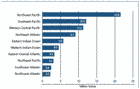
Although the ranking of the first eight principal marine fishing areas in 2006 (Figure 5) was still the same as in 2004, trends in the single regions diverged. Overall catches in the Western Central Pacific and in the Western Indian Ocean continued to increase. In contrast, capture production decreased by more than 10 percent after 2000 in both the Western and Eastern Central areas of the Atlantic Ocean, although they are quite different in terms of the main fishery resources and type of fishing. In the Eastern Indian Ocean, total catches in 2006 rebounded after the decrease in 2005 caused by the destructive effects of the tsunami that affected parts of this region in December 2004. After submission to FAO of final catch statistics for 2005, it became clear that, among the Eastern Indian Ocean countries, those most affected by the tsunami in terms of reduced catches had been Sri Lanka (–51.1 percent), Malaysia (–12.1 percent) and India (–8.4 percent). However, in Indonesia, the 2004 total catch was maintained, as the tsunami impacts on fishing activities in the western part (Banda Aceh) of the country were offset by increased catches in other regions.
Among the temperate areas of both hemispheres, it is worth noting the considerable increase in 2006 catches of Argentine shortfin squid in the Southwest Atlantic, and of European anchovy in the Mediterranean and Black Seas. These increases contributed significantly to the overall 29 and 13 percent respective rise in total catches compared with the previous year. In contrast, in both the Southeast Atlantic and the Southwest Pacific, total catches fell by more than 10 percent in 2006. In the Southeast Pacific, the drop was even sharper. However, it affected fish for human consumption only marginally as it stemmed mostly from the decrease in anchoveta catches, the majority of which are processed into fishmeal and fish oil. In the Northeast Atlantic, catch decline has been progressive, with total catches falling by almost one- quarter in ten years.
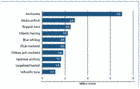
In 2006, the ten species that contributed most to global catches (Figure 6) were the same as in 2004. There were only some minor changes in the ranking. This group of species, which represent more than 30 percent of the total global marine catch, consists of five small pelagic species (anchoveta, Atlantic herring, chub and Chilean jack mackerels, and Japanese anchovy), two tunas (skipjack and yellowfin), two low-value gadiformes (Alaska pollock and blue whiting) that are mostly marketed in processed forms, and the largehead hairtail, a bentho-pelagic species for which 90 percent of the catches are reported by China.
Total catches of some species groups continued to increase in 2006, setting new records. However, different trends can be noted within each group. The tunas reached a new maximum at more than 6.4 million tonnes, with skipjack catches higher than ever, whereas yellowfin catches were reported to have decreased by about 20 percent from the peak reached in 2003. Cephalopod catches also reached a new high in 2006 at 4.3 million tonnes. Within this group, recent catch trends for the three main species show very different patterns. Catches of jumbo flying squid in the Eastern Pacific continued to boom, growing almost fivefold since 2000. However, in the same period, catches of Japanese flying squid in the Northwest Pacific declined. In the Southwest Atlantic, catches of the Argentine shortfin squid recovered after a dramatic drop in 2004–05. Marine crustaceans as a whole totalled 5.7 million tonnes in 2006, with the crab and lobster groups at the highest level ever, and shrimps only slightly lower than the peak reached in 2004. Harvests of bivalves (scallops, clams, oysters and mussels) and gastropods decreased for most species groups in 2005, but they showed signs of recovery in 2006.
After reaching a high of about 0.9 million tonnes in 2003, catches of the “sharks, rays and chimaeras” group have declined. In 2006, they totalled 0.75 million tonnes, a drop of 15 percent from the peak. When analysing the trend in shark catches in the last decade, it should be taken into account that this species group has been at the centre of the attention of international institutions (e.g. the FAO-promoted International Plan of Action for the Conservation and Management of Sharks, known as IPOA–Sharks), regional fishery organizations and the public. This raised awareness has helped to improve the reporting of catches for this group.2 However, this improvement in reporting makes it difficult to identify the trends for actual exploitation. To obtain the best possible collation of available shark data, FAO also complements data reported by countries with those collected by the regional tuna bodies. However, collection and reporting of shark data still need to improve significantly as the formulation of appropriate management measures requires detailed information.
A significant number of tuna and shark species are classified as oceanic (epipelagic and deep-water). Box 1 analyses trends for such species in more detail.”
2 Comparing 1996 and 2006 data, the number of species items in the FAO database rose from 68 to 120, and unidentified catches reported above the family level fell from 68.3 to 57.1 percent.
Source & ©: FAO Fisheries – The State of World Fisheries and Aquaculture, 2008
PART 1:World review of fisheries and aquaculture, Overview, p.10-13
The source document for this Digest states:
Box 1: Trends in high seas catches
Marine catches are reported by countries to FAO according to Fishing Areas set up in the 1950s, many years before the establishment of exclusive economic zones (EEZs). Because the boundaries of the FAO Fishing Areas and of the EEZs do not correspond, data on catches in the high seas (the ocean areas outside the national EEZs) cannot be obtained from the data submitted to FAO. In an attempt to obtain some information on high seas catches, oceanic species that occur in the FAO capture fisheries database (and are likely to be caught in the high seas) have been identified and classified into “epipelagic” and “deep-water” species according to their biological characteristics. The catch data for these two groups of species provide an indication of the trends in high seas catches.
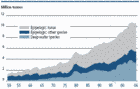
The latest available release (2006 data) of the FAO capture database includes 133 species items classified as deep-water. This number has more than doubled since the first classification1 based on 1999 data, although this also reflects greater global attention to deep-water fishing rather than only increased activities. In fact, the global catch of deep-water species had grown to 3.9 million tonnes in 2003 (see accompanying figure) but it then decreased to 3.3 million tonnes in 2006. This reduction was mainly due to smaller catches of blue whiting, but also to measures taken by the regional fishery organizations (e.g. the North East Atlantic Fisheries Commission and the South East Atlantic Fisheries Organization) to manage fisheries in high seas areas. However, catches of valuable deep-water species, such as the orange roughy (which has an extended geographical distribution and is vulnerable as it grows very slowly and reaches sexual maturity late), have fallen to 20 000 tonnes, a decrease of 78 percent from the high reached in 1990, mostly as a consequence of overexploitation. On the other hand, overall catches of oceanic tunas (about 5.2 million tonnes in 2006) are still growing, and those of other epipelagic oceanic species were stable at about 2 million tonnes in 2004–06 as opposing trends in the main oceanic squid species have offset one another.
In an effort to move towards a better separation of catches taken inside and outside national EEZs, FAO is collaborating with regional fishery organizations on the modification of the statistical division boundaries. The first change was agreed with the South East Atlantic Fisheries Organization, whose Convention Area covers all waters in Fishing Area “47 – Southeast Atlantic” with the exclusion of the EEZs of the continental states. Starting with the 2007 inquiry, countries fishing in Area 47 are requested to return catch statistics according to revised statistical divisions that distinguish between catches taken within and outside the EEZs of the coastal states. This separation of catches will be helpful in evaluating the effects of the International Guidelines for the Management of Deep-sea Fisheries in the High Seas once they have been adopted."
1 FAO. 2003. Trends in oceanic captures and clustering of large marine ecosystems – two studies based on the FAO capture database, by L. Garibaldi and L. Limongelli. FAO Fisheries Technical Paper No. 435. Rome.
Source & ©: FAO Fisheries – The State of World Fisheries and Aquaculture, 2008
PART 1:World review of fisheries and aquaculture, Overview, p.14/15
The source document for this Digest states:
World inland capture fisheries production
In 2006, reported global inland water catches exceeded 10 million tonnes for the first time. Compared with final 2004 data, this represented an increase of 12.8 percent. However, the reliability of inland water catch statistics reported by several countries remains questionable. It is also difficult to distinguish between real increases in catches and increased production reported as a consequence of an improved data collection system.
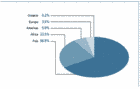
Almost all of the increase registered in the last two years for which data are available has come from Asia. This continent now accounts for two-thirds of total global inland capture production. With 2.4 million tonnes, Africa is a clear second in the ranking by continent (Figure 7) but its production decreased by 2.7 percent in 2006 after a decade-long rising trend. Total catches in the Americas were down slightly from the 2004 high, while the opposite occurred in Europe, with production recovering from the lowest total catch registered in 2004. However, figures for this continent are largely influenced by those of the Russian Federation, which accounts for about 60 percent of Europe’s production.
China and other developing countries together now account for 95 percent of global inland capture production (Table 3). In several developing countries, inland fisheries constitute a primary source of animal proteins, and a significant addition to the main diet in many others. On the other hand, in most industrialized countries, the number of recreational fishers now greatly exceeds that of professional ones, as inland water harvests have been significantly reduced.
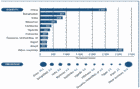
The top ten producers have remained the same as in 2004 (Figure 8). Bangladesh has replaced India in second spot, but it is still a long way behind China. Cambodia has gained four positions with an increase of 30 percent compared with 2005. This impressive performance probably in part reflects an extended coverage of the data collection system. In percentage terms, China still accounts for more than 25 percent of global production, and the share of the top ten producers as a group has grown as the total for inland catches by all the other countries has decreased to 31.6 percent.
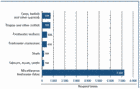
Many countries do not report any species breakdown of their inland water catches but only a single amount for overall national production under the “freshwater fishes NEI (not elsewhere included)” species item. For 2006, more than 57 percent of the global inland water capture was registered under this category in the FAO database, an increased share as also most of the production gain in the last two years was reported as not identified by species or major group of species. The “miscellaneous freshwater fishes” (which includes the “freshwater fishes NEI” item but also another 65 species items) is by far the predominant group (Figure 9). The “carps, barbels and other cyprinids” group, which grew substantially in 2005 and maintained the same level in 2006, is now second, having overtaken the “tilapias and other cichlids” group. However, as most of the unidentified catches are reported by Asian countries such as Bangladesh, China and Myanmar, it is very probable that the great majority of this inland water production belongs to the cyprinid group, which is by far the most common in the continent.
Source & ©: FAO Fisheries – The State of World Fisheries and Aquaculture, 2008
PART 1:World review of fisheries and aquaculture, Capture fisheries
production, p. 13-16
The source document for this Digest states:
The contribution of aquaculture to global supplies of fish, crustaceans, molluscs and other aquatic animals3 has continued to grow, increasing from 3.9 percent of total production by weight in 1970 to 36.0 percent in 2006. In the same period, production from aquaculture easily outpaced population growth, with per capita supply from aquaculture increasing from 0.7 kg in 1970 to 7.8 kg in 2006, an average annual growth rate of 7.0 percent. Aquaculture accounted for 47 percent of the world’s fish food supply in 2006. In China, 90 percent of fish food production comes from aquaculture (2006). This indicates that aquaculture production in the rest of the world accounts for 24 percent of food fish supply.
In 2006, China contributed 67 percent of the world’s supply of cultured aquatic animals and 72 percent of its supply of aquatic plants.
World aquaculture has grown dramatically in the last 50 years. From a production of less than 1 million tonnes in the early 1950s, production in 2006 was reported to have risen to 51.7 million tonnes, with a value of US$78.8 billion. This means that aquaculture continues to grow more rapidly than other animal food-producing sectors. While capture fisheries production stopped growing in around mid-1980, the aquaculture sector has maintained an average annual growth rate of 8.7 percent worldwide (excluding China, 6.5 percent) since 1970. Annual growth rates in world aquaculture production between 2004 and 2006 were 6.1 percent in volume terms and 11.0 percent in value terms.
If aquatic plants are included, world aquaculture production in 2006 was 66.7 million tonnes and worth US$85.9 billion.
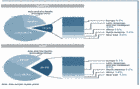
In 2006, countries in the Asia and the Pacific regions accounted for 89 percent of production by quantity and 77 percent of value. Of the world total, China is reported to produce 67 percent of the total quantity and 49 percent of the total value of aquaculture production (Figure 10).4
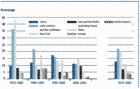
An analysis of production by region for the period 1970–2006 shows that growth has not been uniform (Figure 11). The Latin America and the Caribbean region shows the highest average annual growth (22.0 percent), followed by the Near East region (20.0 percent) and the Africa region (12.7 percent). China’s aquaculture production increased at an average annual rate of 11.2 percent in the same period. However, recently, China’s growth rate has declined to 5.8 percent from 17.3 percent in the 1980s and 14.3 percent in the 1990s. Similarly, production growth in Europe and North America has slowed substantially to about 1 percent per year since 2000. In France and Japan, countries that used to lead aquaculture development, production has fallen in the last decade. It is apparent that, while aquaculture output will continue to grow, the rate of increase may be moderate in the near future.
Table 4 lists the top ten producing countries for cultured aquatic animals in 2006, as well as the top ten countries in terms of annual growth in aquaculture production for the two-year period 2004–06 (but including only those countries that reported production of more than 1 000 tonnes in 2006). Chile and the Philippines have improved their position in the 2006 ranking – compared with that of two years earlier – while Japan and the United States of America have slipped down the list.
Most aquaculture production of fish, crustaceans and molluscs continues to come from inland waters (61 percent by quantity and 53 percent by value). An allocation of aquaculture production by aquatic environments shows that the freshwater environment contributes 58 percent by quantity and 48 percent by value. Aquaculture in the marine environment contributes 34 percent of production and 36 percent of total value. While much marine production is high-value finfish, production in this environment also consists of a large amount of relatively low-priced mussels and oysters.5 Although brackish-water production represented only 8 percent of production in 2006, it contributed 16 percent of the total value, reflecting the prominence of high- value crustaceans and finfish. While production from brackish waters shows the highest growth in terms of quantity since 2000 (11.6 percent per year), the increase in value has stagnated at 5.9 percent. In the same period, the average annual increases in aquatic products from the freshwater and marine water environments have been 6.5 and 5.4 percent in terms of quantity and 7.8 and 8.3 percent in value terms, respectively.
In 2006, more than half of global aquaculture production was freshwater finfish. Output amounted to 27.8 million tonnes, worth US$29.5 billion. In the same year, molluscs accounted for the second-largest share, 14.1 million tonnes (27 percent of total production), worth US$11.9 billion. The much smaller amounts of crustaceans – 4.5 million tonnes – were worth significantly more: US$17.95 billion (Figure 12).
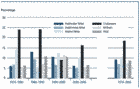
The growth in production of the major species groups continues, although the increases seen in the past decade have been smaller than those of the 1980s and 1990s (Figure 13). The period 2000–06 witnessed strong growth in the production of crustaceans in particular, and in marine fish. Production growth for other species groups has begun to slow, and the overall rate of growth, while still substantial, is not of the order seen in the previous two decades. Figure 14 presents aquaculture production by major species group.
Aquaculture now accounts for 76 percent of global freshwater finfish production and 65 percent of mollusc and diadromous fish production (Figure 15). Its contribution to world supplies of crustaceans has grown rapidly in the last decade, reaching 42 percent of world production in 2006 and, in the same year, it accounted for as much as 70 percent of shrimps and prawns (penaeids) produced worldwide. Most cultured marine species are of relatively high commercial value, sometimes because wild stocks are small or declining. While the overall share of farmed fish in marine finfish production has stayed quite low, for the species that are farmed, aquaculture frequently dominates the market. This is the case for species such as the Japanese seabass, gilthead seabream, red drum and bastard halibut. In fact, for species such as these, the amounts now produced by aquaculture are often substantially higher than the past highest catch recorded by capture fisheries.
Production continues to differ much from region to region. In the Asia and the Pacific region, aquaculture production from China, South Asia and most of Southeast Asia consists primarily of cyprinids, while production from the rest of East Asia consists of high-value marine fish. In Latin America and the Caribbean, in the last decade, salmonids have overtaken shrimp as the top aquaculture species group as a result of outbreaks of disease in major shrimp-producing areas and the rapid growth in salmon production in Chile. In North America, channel catfish is the top aquaculture species in the United States of America, while Atlantic and Pacific salmon dominate in Canada.
Relative to other regions, SSA continues to produce little despite its natural potential. Nigeria leads in the region, with reported production of 85 000 tonnes of catfish, tilapia and other freshwater fishes. There are some encouraging signs in the continent. Black tiger shrimp (Penaeus monodon) in Madagascar and Eucheuma seaweed in the United Republic of Tanzania are thriving, and production of niche species such as abalone (Haliotis spp.) in South Africa is increasing. In North Africa, Egypt is by far the dominant country in terms of production (99 percent of the regional20total) and, in fact, is now the second largest producer of tilapia after China and the world’s top producer of mullets. In the Near East, Iran (Islamic Republic of) and Turkey are two leading countries in the region, each producing about 130 000 tonnes of trouts, carps and Indian white prawn.
However, in global terms, a few countries still dominate production of major species groups. China produces 77 percent of all carp (cyprinids) and 82 percent of the global supply of oysters (ostreids). The Asia and Pacific region accounts for 98 percent of carp and 95 percent of oyster production. Eighty-eight percent of shrimps and prawns (penaeids) also come from this region, with the top five producers (China, Thailand, Viet Nam, Indonesia and India) accounting for 81 percent. Meanwhile Norway and Chile are the world’s leading producers of cultured salmons (salmonids), accounting for 33 and 31 percent of world production, respectively. Other European producers supply another 19 percent.
World aquatic plant production 6 by aquaculture was 15.1 million tonnes (US$7.2 billion) in 2006. The culture of aquatic plants has increased consistently, with an average annual growth rate of 8.0 percent since 1970. In 2006, it contributed 93 percent of the world’s total supply of aquatic plants. Some 72 percent originated in China, with 10.9 million tonnes (US$5.2 billion). Virtually all of the remaining production also came from Asia: the Philippines (1.5 million tonnes), Indonesia (0.91 million tonnes), the Republic of Korea (0.77 million tonnes) and Japan (0.49 million tonnes). Japan is the second-most important aquatic-plant-producing country in terms of value (US$1.1 billion), owing to its high-priced Nori production. Japanese kelp (Laminaria japonica – 4.9 million tonnes) showed the highest production, followed by Wakame (Undaria pinnatifida – 2.4 million tonnes) and Nori (Porphya tenera – 1.5 million tonnes).
Integrated multitrophic aquaculture (incorporation of species from different trophic/nutritional levels in the same system) is on the rise. By converting solid and soluble nutrients from fed organisms and their feed into harvestable crops and/or extractive organisms (thereby reducing the potential for eutrophication) and by increasing economic diversification, integrated multitrophic aquaculture promotes economic and environmental sustainability. As the waste of one species becomes the nutritional input to another, the potential for contamination is a food safety and quality concern. However, as the practice is new, research is needed in this area to ensure that fish so produced do not present a danger to consumers.
Organic aquaculture has also attracted the attention of consumers, environmental advocates and entrepreneurial innovators. Some argue that it reduces overall exposure to toxic chemicals from pesticides that can accumulate in the ground, air, water and food supply, thereby lessening health risks for consumers. Some of its other merits include curbing topsoil erosion, improving soil fertility, protecting groundwater and saving energy. Moreover, organic standards prohibit the use of genetic engineering in production, which again reassures consumers. The growing interest in organic aquaculture has prompted governments to regulate the sector. Standards and certification procedures are being developed and tested – they are necessary tools to promote investment. In the absence of international standards, interested parties are developing their own specific organic aquaculture standards and accreditation bodies. These standards often vary significantly from place to place, certifier to certifier, and species to species.
GMOs continue to be a controversial issue also in aquaculture. Supporters claim that GMOs enhance the performance and profitability of farmed aquatic resources and, hence, improve food security. Opponents argue that they pose significant risks to the environment and, possibly, to human health. While there is universal consensus that GMOs should be regulated, there are disagreements as to what the regulations should contain. Some groups advocate a complete ban on GMOs, others call for mandatory labelling of genetically modified food and other products in order to alert consumers to potential health effects. However, GMO products from aquaculture have not yet appeared on the market.
Linked to, but distinct from, consumers’ demand for fish quality standards is the public perception that aquaculture harms the environment. This public mistrust of aquaculture has occurred in some places leading to legal challenges, pressure on moratoria, and even vandalism. In some instances, attitudes towards aquaculture have influenced decision-makers, pressuring them to regulate and often to halt the expansion of aquaculture. A recent global FAO study on constraints facing aquaculture found that respondents in all regions except Africa and Eastern Europe expect such opposition to be a threat to its future development.7 In some regions, the cause of the opposition is considered to be misinformation; in others, it is particular attributes of aquaculture. Aware of the need to address these issues, FAO and its partners have drafted guidelines for aquaculture certification (see page 103). These guidelines cover animal health and welfare, food safety and quality, environmental integrity and social responsibility associated with aquaculture. They provide guidance on the development, organization and implementation of credible aquaculture certification schemes. The aims are: (i) to reassure producers, buyers, consumers and civil society regarding the quality and safety of aquaculture products; and (ii) to provide a further tool to support responsible and sustainable aquaculture.
3 The term “other aquatic animals” also includes amphibians (frogs) and reptiles (turtles). For brevity, referred to hereafter as “fish, crustaceans and molluscs” or “food fish supply” or “aquatic animals”.
4 The regions match those presented in the “Outlook” section of this document.
5 While mussels and oysters are high-priced per kilogram of meat, they are relatively low-valued in terms of value per kilogram of whole animals, as shell weight can account for a large percentage of the total (live) weight. Statistics on aquaculture production are reported as live weight.
6 The production of aquatic plants is not considered in the figures in the remainder of this section.
7 FAO. (forthcoming). Prospective analysis of aquaculture development: the Delphi method. Fisheries Technical Paper No. 521. Rome.
Source & ©: FAO Fisheries – The State of World Fisheries and Aquaculture, 2008
PART 1:World review of fisheries and aquaculture, Aquaculture
production, p. 16-23



This summary is free and ad-free, as is all of our content. You can help us remain free and independant as well as to develop new ways to communicate science by becoming a Patron!




 BECOME A PATRON!