

Languages:

Sustainability is the capacity to meet our needs without compromising the ability of future generations to meet theirs. How sustainable are current practices?
How sustainable are current practices?
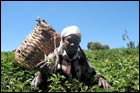
Agriculture is closely linked to many concerns, including biodiversity loss, global warming and water availability.
The 2008 International Assessment of Agricultural Science and Technology for Development (IAASTD) focuses on how to make better use of agricultural science, knowledge and technology to reduce hunger and poverty, improve rural livelihoods, and foster equitable and sustainable development. More...
Latest update: 15 April 2008

Water is essential for life, but humanity faces complex challenges related to increasing demand, variability of supply, widespread pollution and water-related disasters. More...
Latest update: 31 March 2021
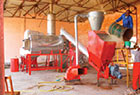
Biochar can be used as fuel or as a fertilizer, and is particularly relevant to developing countries. More...
Latest update: 4 March 2015
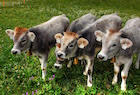
Climate change poses a threat to food security; what are the strategies and policies that could help address this problem? More...
Latest update: 28 June 2017
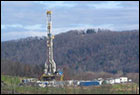
What are the greenhouse gas emissions and climate implications of shale gas exploitation? More...
Latest update: 10 February 2015

One possible option for reducing CO2 emissions is to store it underground. This technique is called Carbon dioxide Capture and Storage (CCS).
How does it work? Could it really help addressing climate change?
The International Panel on Climate Change (IPCC) provides answers in a special report. More...
Latest update: 15 September 2007
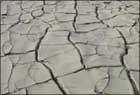
Desertification, the persistent degradation of drylands, threatens many livelihoods.
The Millennium Ecosystem Assessment (MA) produced in 2005 by a large international panel of scientists explored possible options to avoid or reverse desertification and its negative impacts. More...
Latest update: 15 October 2006
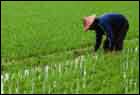
Humans depend heavily on ecosystem for benefits such as food, but we also have a tremendous impact on them.
The Millennium Ecosystem Assessment (MA) produced in 2005 by a large international panel of scientists explored possible options to avoid or reverse desertification and its negative impacts. More...
Latest update: 15 March 2005
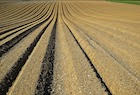
Soil is a vital resource for food security, but in Europe it is being degraded by pollution, overuse, and erosion. How could soil be protected? More...
Latest update: 10 March 2017

Humans consume more goods and services than what is sustainable in terms of non-renewable resources. How can the concept of a circular economy help alleviate this problem? More...
Latest update: 16 May 2017

The UN Food & Agriculture Organization (FAO) regularly assesses the State of World Fisheries and Aquaculture. The key findings of its latest assessment were released in 2009.
Indeed, many fish stocks are being overexploited, and the international nature of the resources makes them difficult to manage. Is the current food supply in danger? More...
Latest update: 2 March 2009

Forests provide a wide range of benefits and are heavily exploited.
Every 5 years the UN Food & Agriculture Organization (FAO) updates its Global Forest Resources Assessment.
Its latest update published in 2006 considers what progress has been made towards sustainable forest management across the world. More...
Latest update: 15 January 2007

In coming years, the world’s energy consumption is expected to increase dramatically. While fossil fuels will remain an important source of energy, renewable energies will also gain importance. Could biofuels derived from forests help meet the energy demand? More...
Latest update: 16 March 2009

How can an integrated approach to land management help meeting the needs of the world’s growing population? More...
Latest update: 2 February 2018
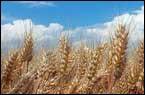
We are regularly confronted with genetically modified foods, be it in the news or on our plates. In what way are GM crops different from conventional crops? What is known about the possible risks for human health or the environment? More...
Latest update: 17 December 2017
In 2002, the Convention on Biological Diversity adopted a target: reduce the loss of biodiversity by 2010.
That target was missed, and a new set of targets for 2020 were adopted. More...
Latest update: 6 November 2017

It is estimated by the FAO that each year, one-third of produced for all food human consumption in the world is lost or wasted. This has impacts for food security and for the environment. More...
Latest update: 20 February 2015

How did India fare in meeting the objectives of the Millennium Development Goals? More...
Latest update: 12 April 2016
 International Convention on Biological Biodiversity - Outcome of the 2018
Conference of the Parties (CBD)
International Convention on Biological Biodiversity - Outcome of the 2018
Conference of the Parties (CBD) 
Key decisions adopted in 2018 by the Conference of the Parties (COP) to the Convention on Biological Diversity in preparation for a 2050 Biodiversity Vision for the Global Biodiversity Outlook 5 report published in 2020. More...
Latest update: 5 May 2021

Serious questions are being raised about the environmental impacts of producing liquid biofuels for transport, the costs of policies to promote them and their possible unintended consequences.
What could be the future role of biofuels for agriculture, food security and climate change? More...
Latest update: 30 September 2009
How can phosphate resources be managed to ensure food security? More...
Latest update: 16 March 2016
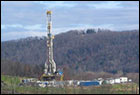
New sources of gas are being increasingly being mobilized in order to meet the demand.
One such important source is shale gas, which needs for extraction a process called « hydraulic fracturing », what are the potential health and environmental risks of it? More...
Latest update: 30 September 2013

Reusable tableware consistently outperforms single-use tableware in all the studies and across most environmental impact categories More...
Latest update: 20 May 2021
A comprehensive assessment of Europe’s progress towards achieving environmental sustainability. More...
Latest update: 20 September 2015

Vaccination saves millions of lives each year. How do they work and is there still progress to be made? More...
Latest update: 30 September 2014
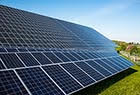
Solar power has become significantly cheaper in the last few years, and installed capacity has grown substantially in the same period. What are the advances that are needed to reduce the cost further and deploy the technology on a larger scale ? More...
Latest update: 21 November 2015

The biofuel policies in the EU have impacts on developing countries, how can policies take that into account? More...
Latest update: 5 December 2017
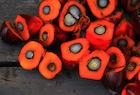
Palm oil is one of the most used vegetable oils, in good part because oil palm culture is cost-effective.
What is the impact of oil palm culture for biodiversity and how can it become sustainable? More...
Latest update: 26 April 2019
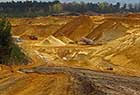
The extensive use of sand and gravel in the production of concrete is having consequences on the environment.
What exactly is happening ? More...
Latest update: 30 October 2015

Tidal energy is a predictable renewable energy source. What is the potential or this energy source? More...
Latest update: 30 August 2015

Many species that are essential for biodiversity and for agricultural production, such as bees, are currently threatened. Since biodiversity underlies the food system, it is a critical issue for food security and for sustainable development. More...
Latest update: 25 April 2019
How can we ensure that the sustainable use of the services and resouces that the oceans offer ? More...
Latest update: 29 March 2016

Pollution is everywhere. Contaminants coming from human activity are found in the most remote reaches of the planet.
How can we ensure that the planet doesn’t degrade further? More...
Latest update: 19 December 2017
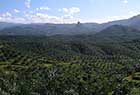
More forest is cut down each year in Indonesia than in any other country.
What can be done to preserve Indonesia’s forests ? More...
Latest update: 25 October 2015
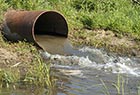
How can we better manage our wastewater in order to relieve some of the pressure on water resources? More...
Latest update: 18 March 2016

Water is essential for human survival and well-being and important to many sectors of the economy. Yet, resources are unevenly distributed and they are under pressure due to human activity. How can water resources be managed sustainably while meeting an ever increasing demand? More...
Latest update: 15 January 2008
Water Resources 2018: improving the management of natural water resources through so-called nature-based solutions (UN Water) 
Demand for water in the world is steadily increasing at the same time as the water supply is facing challenges from pollution, climate change, desertification, agriculture. Can these challenges be met with solutions inspired by natural processes? More...
Latest update: 18 July 2018
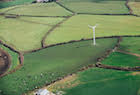
Worldwide, the fraction of the global burden for both death and disease associated to environmental risks is 22%.
To what extent can environmental management better protect people’s health? More...
Latest update: 5 November 2016
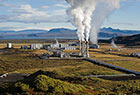
Geothermal energy comes from the natural heat of the earth. It is used in some areas for electricity production and heating. What is the place of geothermal energy in the energy mix? More...
Latest update: 8 April 2015


This summary is free and ad-free, as is all of our content. You can help us remain free and independant as well as to develop new ways to communicate science by becoming a Patron!

 BECOME A PATRON!